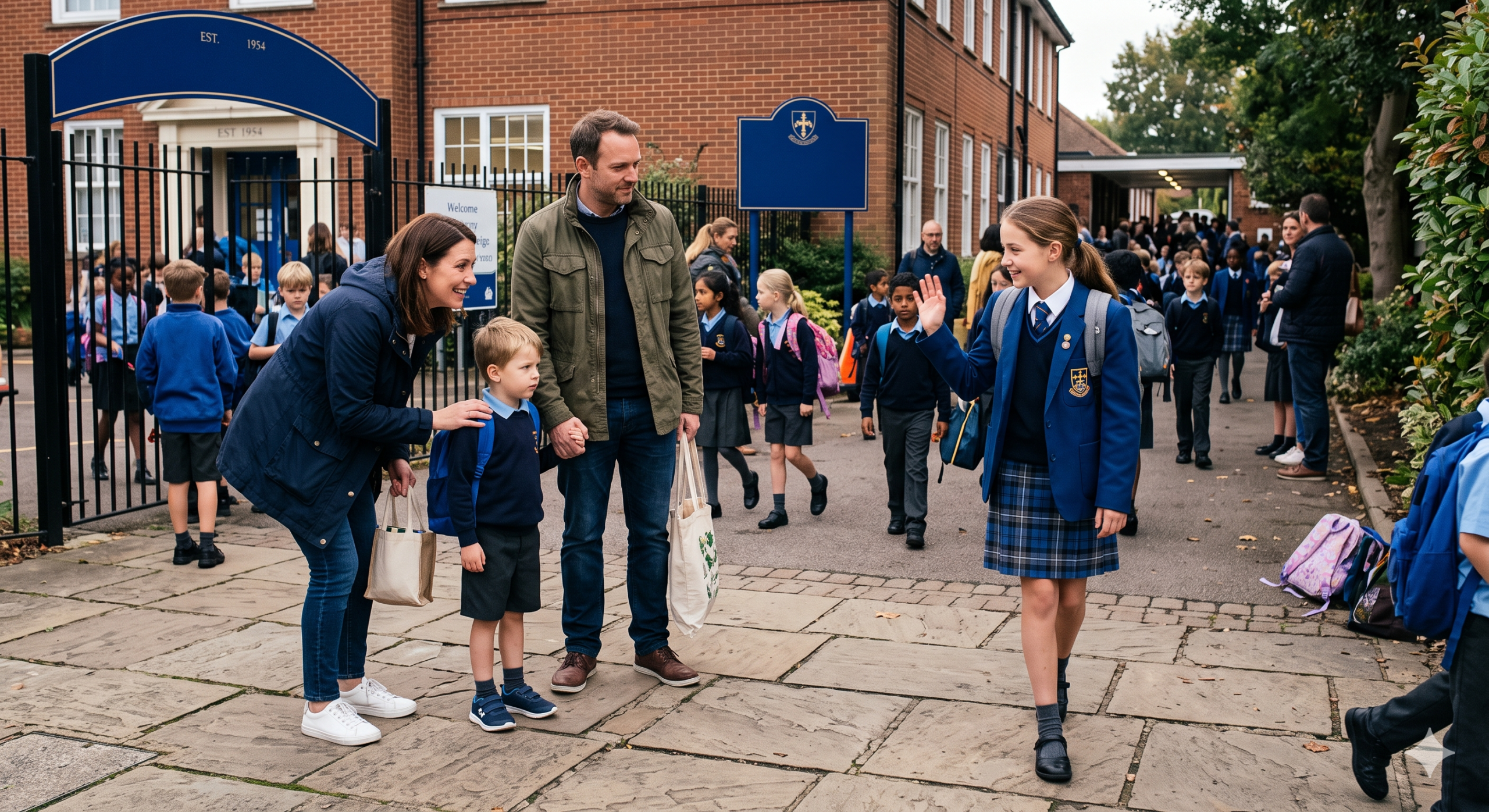
A real-life parenting experience showing how patience and support help children adapt to change and develop independence.
Parenthood is a journey filled with countless experiences and valuable lessons. Every day, our children teach us something new, and sometimes the simplest incidents leave the deepest impact.
My two children study in the same school. My daughter is 12 years old and studies in Class Eight, while my son is 4.5 years old and attends Lower KG.
Although their school timings differ by about thirty minutes, we drop them off together every morning. Over time, a beautiful routine developed between them. My daughter would first take her younger brother to his classroom and then head to her own class.
My little boy loved this arrangement. Walking into school with his elder sister made him feel safe and confident. It became such a natural part of his day that neither of them ever questioned it.
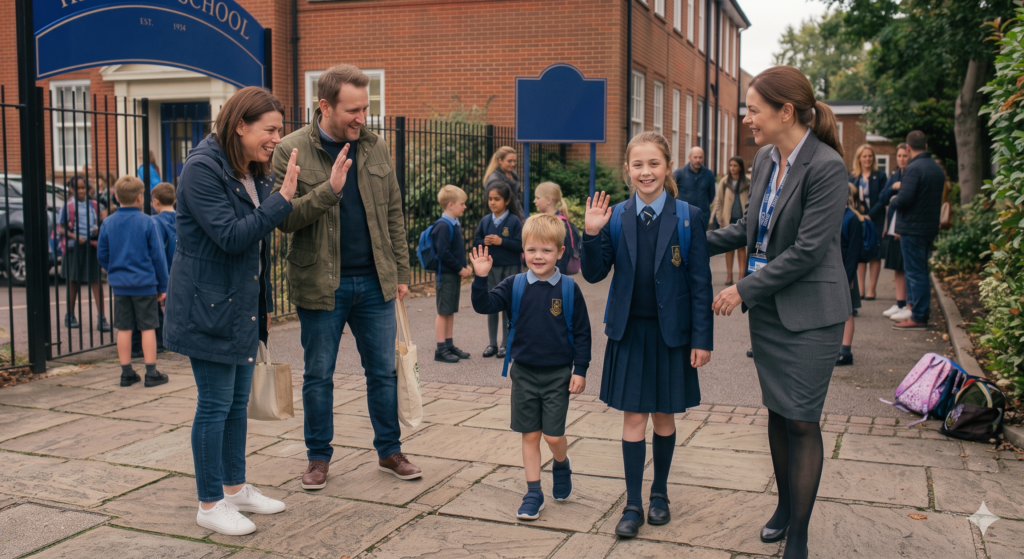
However, one incident taught us an important parenting lesson: children need routines, but they also need help learning how to adapt when those routines change.
The Unexpected Morning
One morning, as usual, my husband and I were driving the children to school. Unfortunately, a massive traffic jam had formed quite a distance from the school gate. Like many other parents, we found ourselves stuck with no way to move forward.
As the minutes passed, my daughter became increasingly anxious.
The school requires students from Grades 3 to 12 to enter before 8:00 a.m., while younger children have until 8:30 a.m. Teachers also expect senior students to be seated in their classrooms by 8:00.
My daughter has always been very punctual. Looking at the clock, she worried she would be late.
Finally, she said,
“Today I won’t be able to take my brother to his classroom. Otherwise, I’ll be late for my own class.”
My husband and I understood her concern and agreed with her decision.
My son remained silent.
He didn’t protest, but I could tell he wasn’t happy.
Trying to comfort him, I said,
“It’s okay, dear. Today you can go with one of the attendants. Tomorrow your sister will take you again.”
He listened quietly but didn’t respond.
My husband added,
“You’re a big boy now. You can go by yourself, right?”
My son immediately replied,
“How can I go by myself? The security uncles don’t allow children to go through the way Didi uses, and I don’t know the other way.”
His concern was completely reasonable.
The school campus is quite large, and he had been attending for only two months. At his age, it was natural that he still relied on familiar guidance.
I reassured him,
“Don’t worry. That’s exactly why the attendants are there. They will help you reach your classroom.”
Even then, the disappointment on his face remained.
A Difficult Goodbye
By the time we reached the school gate, it was already 7:55 a.m.
My husband quickly told me,
“Take her fast. Otherwise, she’ll be late.”
At that moment, my son suddenly burst into tears.
“I want to go with Didi!”
My heart sank.
My daughter, who also had an exam that day, gently replied,
“It’s not possible today. I have to run now. Bye!”
She waved and hurried inside.
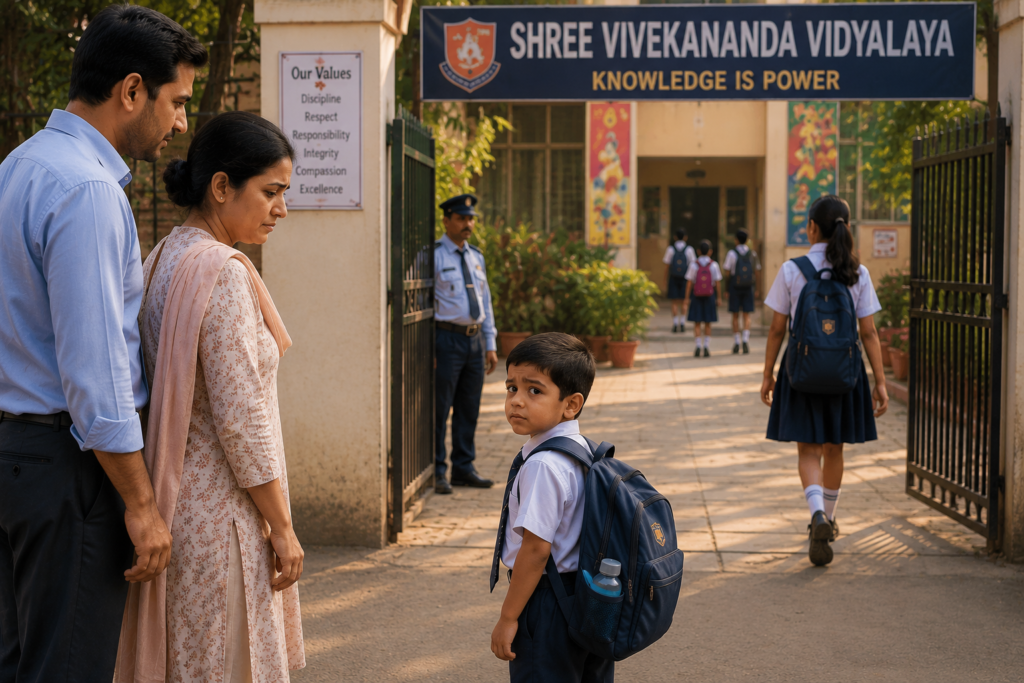
Meanwhile, my little boy cried uncontrollably.
We tried our best to reassure him. We explained that attendants would escort him safely to his classroom. We informed the security guards and attendants that he still wasn’t familiar with the route.
Eventually, he agreed to enter.
An attendant held his hand and started walking toward the classroom.
As he walked away, he kept turning back, waving at us through his tears.
Watching him disappear into the school building was heartbreaking.
Every day, we happily watched our children walk into school together.
That day felt completely different.
An Important Parenting Realization
On the way home, my husband said,
“I felt really sorry for him today.”
I felt exactly the same.
But I also realized something important.
“Maybe this happened for a good reason,” I replied.
“What if one day his sister is absent? What if she has exams, study leave, or is sick? He needs to learn that sometimes he will have to manage without her.”
My husband agreed.
“You’re right,” he said. “But it won’t happen in a single day. We need to help him understand. Eventually, he will.”
And he was right.
That afternoon, after school, I casually asked my son how his day had been.
“Very good!” he replied with a smile.
Encouraged, I asked,
“So from tomorrow, you’ll be able to enter school by yourself?”
He simply looked at me and stayed silent.
I realized he wasn’t ready to discuss it yet.
Progress Takes Time
A few days later, another opportunity arrived.
My daughter developed a fever and had to stay home for three days.
Naturally, my son had no choice but to enter school without her.
The first day, he cried again.
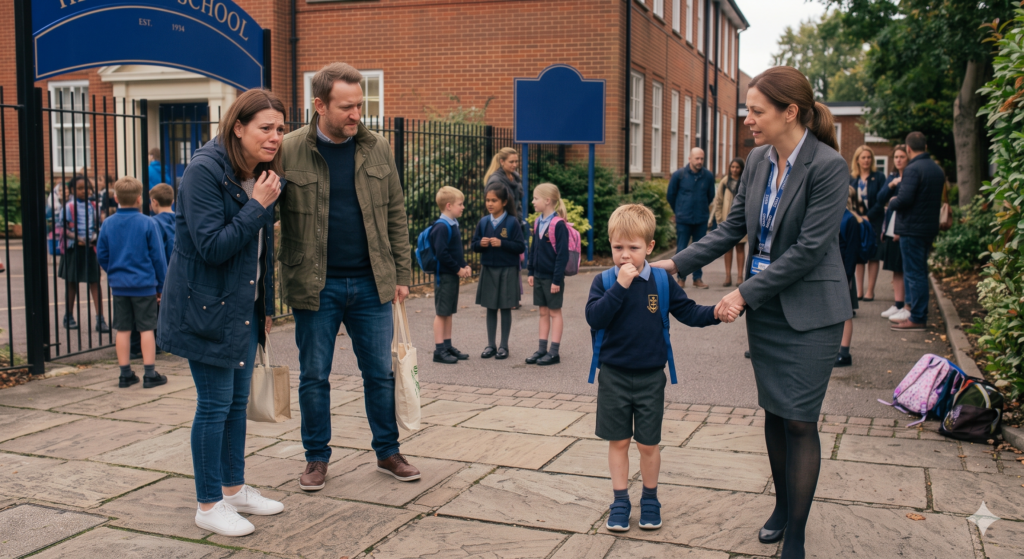
The second day, he didn’t cry, but he entered with a gloomy expression.
The third day, things improved even more.
He wasn’t smiling, but he wasn’t upset either.
Little by little, he was adapting.
And that was the moment we understood something valuable about child development.
Children can adjust to new situations.
They simply need time.
The Parenting Lesson We Learned
Today, this issue has completely disappeared.
Of course, my son is still happiest when his elder sister accompanies him.
But if she cannot, he enters the school confidently on his own.
What once seemed like a major challenge is no longer a problem.
This experience taught us that children naturally feel secure in familiar routines and environments. When those routines suddenly change, they may feel anxious, hesitant, or uncomfortable.
That doesn’t mean they cannot adapt.
It simply means they need patience, understanding, and support from the people they trust most.
As parents, we often want to protect our children from every difficult emotion. However, emotional growth happens when we gently guide them through change rather than shielding them from it.
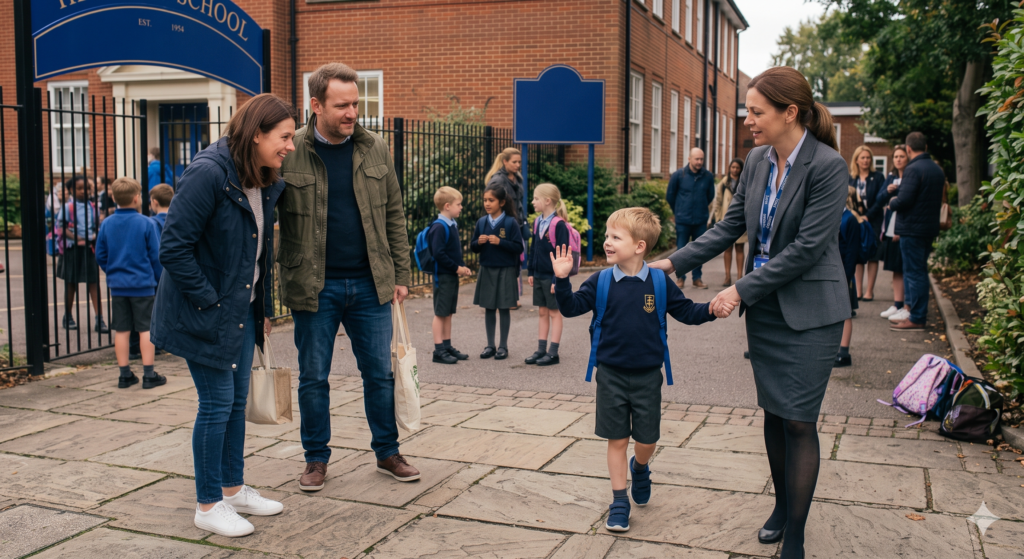
Children learn resilience one small step at a time.
They need parents who encourage them, reassure them, and give them the confidence to explore unfamiliar situations.
After all, we are not only their caregivers. We are their guides, their teachers, their friends, and their biggest source of security.
And sometimes, the greatest parenting lesson is learning that growth takes time—but it always comes.
you can also check my other topic based on Parenting and Child Development.
https://ritusamhita.com/From Worry to Wisdom: A Parenting Lesson from Child
https://ritusamhita.com/A Simple Parenting Trick That Actually Worked
Have you ever gone through a similar situation as a parent? How did your child react, and what did you learn from it? Share your experience in the comments below—I would love to hear from you!
2 responses to “When Routine Changes: A Parenting Lesson About Helping Children Adapt”
[…] You can check my other posts about parenting at these links:https://ritusamhita.com/One More Chapter in Our Parenting Journeyhttps://ritusamhita.com/When Routine Changes: A Parenting Lesson About Helping Children Adapt […]
[…] If you enjoyed this real-life parenting story, you may also enjoy reading these related articles from my blog.https://ritusamhita.com/The Parenting Mistake My 4-Year-Old Exposed: A Lesson Every Parent Should Learnhttps://ritusamhita.com/He Didn’t Look Back: A silent Goodbyehttps://ritusamhita.com/When Routine Changes: A Parenting Lesson About Helping Children Adapt […]