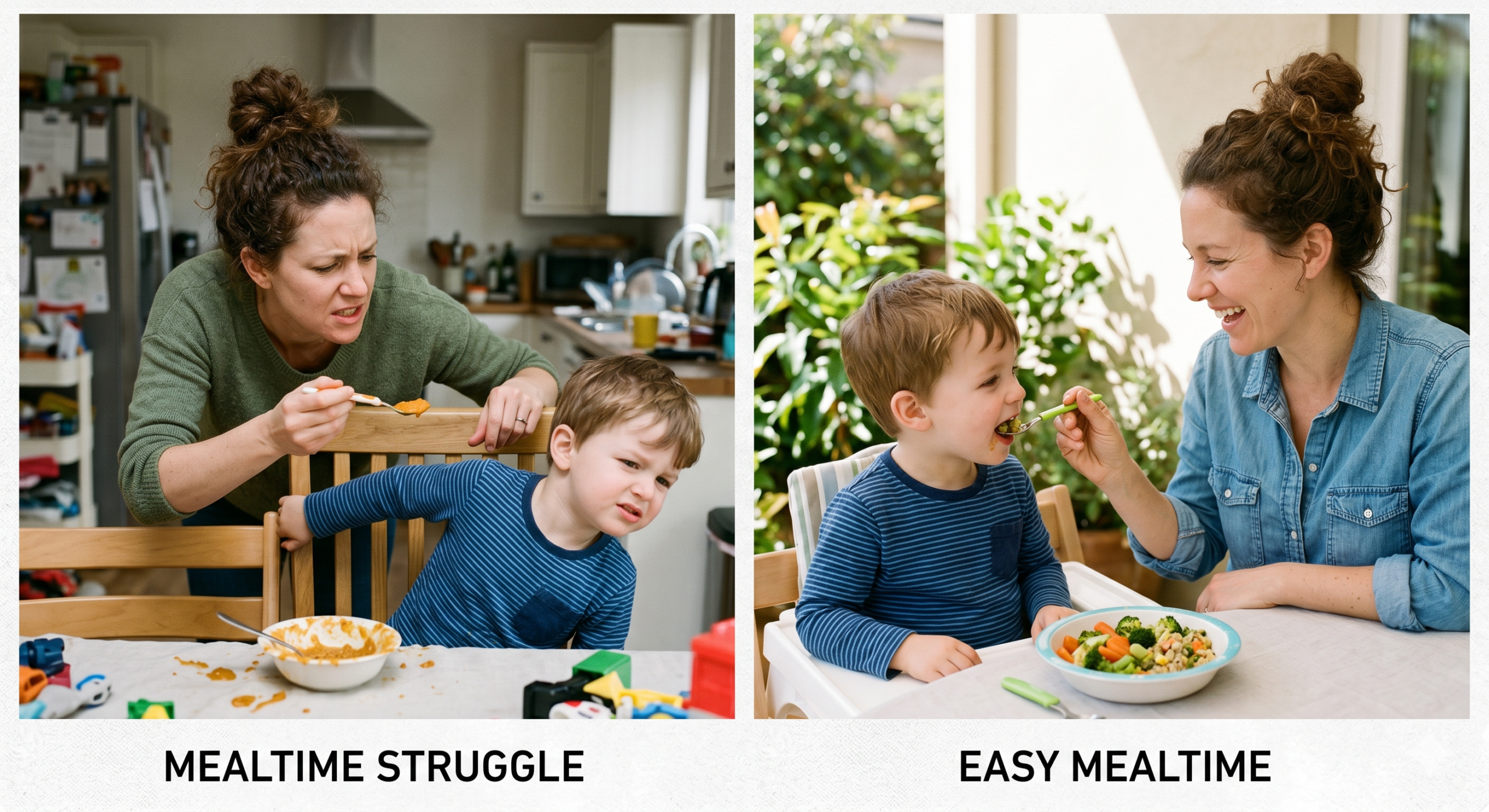
As parents, we often hear that comparing children is harmful. Most parenting advice and positive parenting techniques suggest avoiding comparisons to protect a child’s confidence.
But is it always wrong?
Through my own real-life parenting experience, I discovered that sometimes, a healthy comparison in parenting can actually support child behavior improvement—when used with care and love.
📚 Learn More
Most parenting advice suggests avoiding comparisons to protect a child’s confidence. According to UNICEF, every child develops at their own pace…
👉 Link to:
https://www.unicef.org/parenting/child-development
My Daily Struggle: Feeding My Toddler
Like many parents dealing with toddler eating habits, I faced a daily challenge—getting my son to finish his breakfast before school.
Every morning felt like a battle. He would take forever to eat, and we often ended up rushing for school. This phase continued for a long time, testing my patience.
Interestingly, my daughter was completely different. This reminded me of an important truth in child development—every child grows and behaves differently.
My son could quickly finish junk food, but when it came to regular meals, especially before school, it became a struggle. If you’ve ever dealt with picky eaters, you’ll know exactly what I mean!
Still, I held on to one belief: with the right parenting tips for toddlers, things would eventually improve.

The Moment That Changed Everything
As time passed, my son started preschool and began making friends. Like many children, he started observing and copying them—something very common in early child behavior patterns.
That’s when I saw an opportunity to apply a simple yet effective gentle parenting strategy.
One morning, during breakfast, I casually said:
“You’re taking a long time to eat. Your friend finishes his breakfast very fast.”
And just like that—something changed.
He started eating faster. Not out of fear or pressure, but motivation.
To my surprise, this wasn’t a one-time improvement. Over the next few days, his speed remained consistent. This small shift showed me how healthy comparison in parenting can sometimes work as a tool to motivate children.

Children often learn by observing others, a concept supported by research in Child Development.
👉 Link idea:
https://www.apa.org/topics/children/learning
Applying the Same Parenting Approach Again
I noticed similar results during potty training.
Many parents search for potty training tips, but my experience taught me that timing matters more than pressure. My son started using the potty at around 3.5 years old.
Before that, I had tried, but when he resisted, I chose not to force him. This decision came from my earlier parenting experience with my daughter, who also learned in her own time.
Every child follows their own pace in toddler milestones, and forcing them often delays progress instead of helping.
What This Parenting Lesson Taught Me
This journey changed my perspective on smart parenting.
Yes, comparing children in a negative way can harm them. But a healthy comparison in parenting, when done gently, can support raising confident kids.
The key lies in how we do it:
- ❌ Not to shame
- ❌ Not to pressure
- ❌ Not to compare constantly
But instead:
- ✅ To gently encourage
- ✅ To inspire better habits
- ✅ To support natural child development
Final Thoughts
There is no one-size-fits-all rule in parenting. Every child is unique, and every parent learns through experience.
The goal is not to follow every rule blindly, but to understand your child and choose the right parenting strategies that work for them.
Because in the end, parenting is not about comparison—it’s about connection, patience, and growth. ❤️
If you enjoy reading real-life parenting experiences, you can explore more stories on my blog.
ritusamhita.com
One response to “A Simple Parenting Trick That Actually Worked”
[…] https://ritusamhita.com/A Simple Parenting Trick That Actually Worked […]