The Datura plant has intrigued me since childhood. In Hinduism, it is sacred and offered to Lord Shiva during prayers. While I knew about its medicinal properties, I recently discovered its highly toxic nature and the risks it poses.
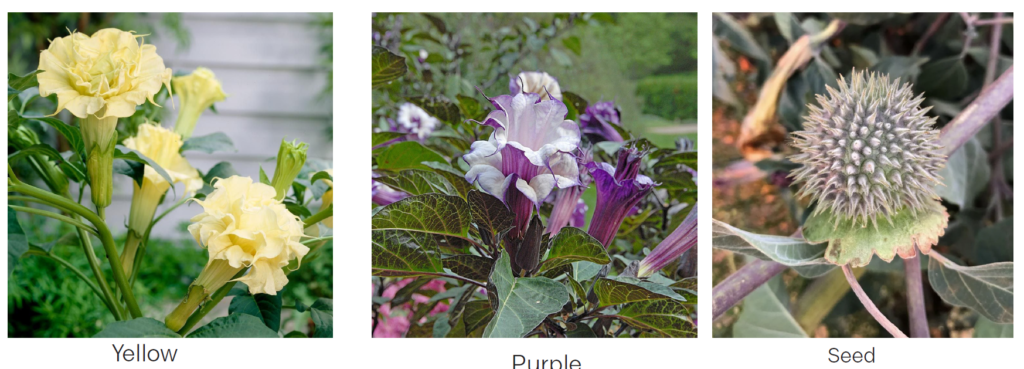
Datura is a genus of nine species from the nightshade family (Solanaceae), known by names like thornapple, jimsonweed, devil’s trumpet, and moonflower. Its striking white to purple trumpet-shaped flowers and spiny seed pods are beautiful but dangerous. The seeds and flowers are highly poisonous.
Toxic effects of Datura are severe, including respiratory depression, irregular heartbeat, fever, delirium, hallucinations, and psychosis. Ingesting it can also cause urinary retention, pupil dilation (mydriasis), and light sensitivity (photophobia). Symptoms appear within 30 to 60 minutes and last 24 to 48 hours or even weeks in severe cases, potentially resulting in memory loss, confusion, or death.
Despite its risks, Datura offers remarkable medicinal benefits when used carefully. It can relieve pain, reduce fever, enhance heart function, improve fertility, promote sleep, ease childbirth, and support skin and hair health. However, due to its narcotic nature and overdose risks, it should never be used unsupervised.
Datura’s dual nature as both a sacred and medicinal plant and a dangerous toxin highlights the need for awareness. Educating ourselves and ensuring the safety of children and others is essential. I hope this information offers valuable insight.
14 responses to “Datura Plant: Sacred, Medicinal, and Toxic”
I discovered your blog site on google and verify a couple of of your early posts. Proceed to keep up the very good operate. I just additional up your RSS feed to my MSN News Reader. In search of forward to reading extra from you in a while!?
I didn’t get what you are talking about. please tell me again what you are asking?
I’m curious to find out what blog system you have been using? I’m experiencing some small security issues with my latest blog and I’d like to find something more safe. Do you have any suggestions? http://www.kayswell.com
I write my blog using Hostinger. I didn’t face any security issues till now. You can go for it if you want.