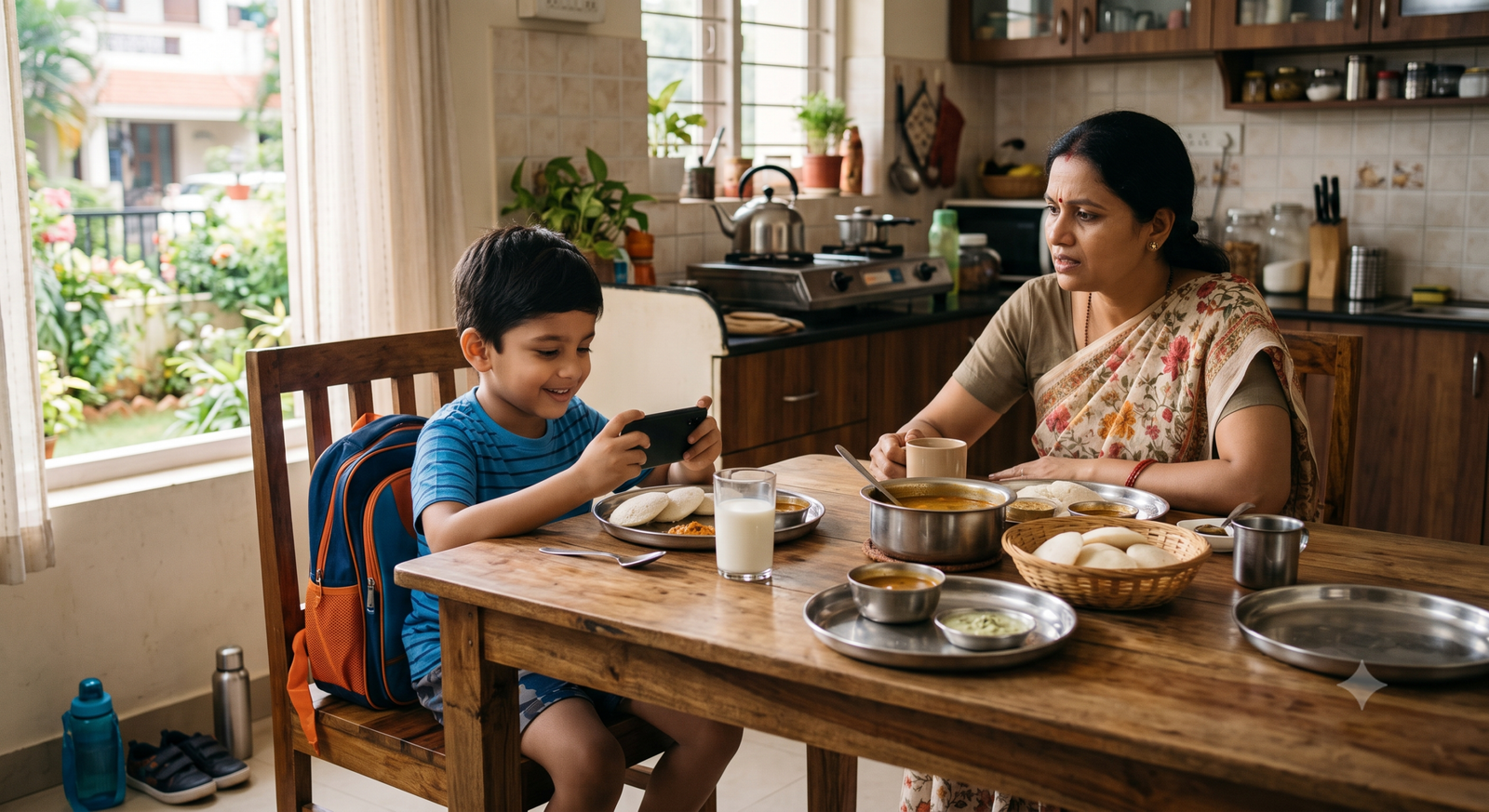
Learn how excessive screen time affects children and discover practical parenting tips, healthy screen time in children, and expert recommendations.
As parents, we always want to share things that can make a positive difference in another child’s life. One topic that deserves sincere attention today is screen time in children. It has become one of the biggest concerns for parents across the world.

Unlike our childhood, when smartphones were rare, today’s children grow up surrounded by screens. Smartphones, tablets, televisions, social media, gaming apps, and video platforms are now a part of everyday life. Naturally, children imitate what they see. When adults spend hours watching videos, scrolling through social media, or playing games, children want to do the same.
Using digital devices is not wrong. However, everything should have a limit. Spending hours in front of a mobile phone or television can seriously affect a child’s physical, mental, and emotional well-being.
Why Excessive Screen Time Is Harmful
Research has shown that excessive screen time is associated with several problems, including:
- Behavioural issues
- Emotional problems
- Poor sleep quality
- Reduced concentration in studies
- Delayed language and communication skills
- Less interaction with family and friends
- Reduced physical activity
- Increased risk of anxiety and irritability
Many pediatricians now discuss healthy screen habits during routine check-ups because the effects of excessive screen exposure are becoming increasingly common.
Screen Time Guidelines for Children
The Centers for Disease Control and Prevention (CDC) and several other health organizations recommend limiting screen time according to a child’s age. In this article, I will also share these recommended guidelines so that parents can make informed decisions.

Children are innocent. They do not understand what is good or harmful for them. As parents, it is our responsibility to guide them and protect them from habits that may negatively affect their future.
The Reality of Modern Parenting
Nowadays, both parents often have busy work schedules. After returning home, everyone needs some time to relax, and that is completely understandable.
Many parents hand over a smartphone to their child so they can finish household work or enjoy some personal time. Others may be busy using one phone while their child uses another.

Some of you may think, “You are not a working parent, so you may not understand how exhausting a working day can be.”
I completely understand that feeling, and I agree that every parent deserves some time to relax.
However, our children are also our responsibility. If they grow into kind, disciplined, confident, and responsible human beings, nothing will make us happier.
Set Clear Screen Time Limits
I am not saying that children should never use a smartphone. Instead, set a fixed daily screen time limit and follow it consistently.
For example:
- 30 minutes twice a day, or
- 1 hour once a day.
Consistency is the key. When children follow the same routine from an early age, it gradually becomes a healthy habit.
Watch Together Whenever Possible
Instead of giving children unrestricted access to a phone, try sharing screen time with them.

Watch:
- Educational videos
- Inspiring stories
- Age-appropriate cartoons
- Rhymes
- Science experiments
- Creative learning activities
Watching together creates opportunities to talk, answer questions, and strengthen the parent-child bond.
Monitor What Your Child Watches
Content matters just as much as screen time.
Many children, especially boys, enjoy watching fighting scenes, racing games, or action videos. While not every child is affected in the same way, repeated exposure to violent content may encourage aggressive behaviour or imitation.

YouTube Shorts and other short-form videos often recommend content that is not suitable for children. Because children are naturally curious, they keep scrolling and may come across videos that are confusing or inappropriate for their age.
As parents, we should:
- Enable parental controls.
- Use content filters and child-friendly profiles.
- Block inappropriate channels or videos.
- Regularly check viewing history.
- Teach children how to use digital devices safely.
These simple steps can make a significant difference.
Don’t Let Screens Replace Real-Life Relationships
One of the saddest sights today is watching children sit quietly with a mobile phone during family gatherings while adults interact with one another.
Childhood should be filled with conversations, laughter, games, and relationships—not endless scrolling.

Studies have shown that spending time with siblings, cousins, friends, and family members supports healthy emotional, social, and physical development. Real-life interaction teaches empathy, communication, cooperation, and problem-solving—skills that no screen can replace.
When we were children, we looked forward to meeting our cousins and relatives. We enjoyed outdoor games, storytelling, and family conversations. Those moments created lifelong memories.
Today’s children deserve those memories too.
Practical Tips to Reduce Screen Time
Here are some simple habits every family can follow:

- Set a daily screen time limit.
- Avoid screens during meals.
- Keep smartphones and tablets out of bedrooms.
- Turn off all screens at least one hour before bedtime.
- Encourage outdoor play and physical activities.
- Spend quality time together as a family.
- Read books together.
- Play board games or engage in creative hobbies.
- Be a role model by reducing your own screen time.
Children learn more from what we do than from what we say.
Final Thoughts
Children are innocent, but as parents, we have the wisdom to guide them. If we make conscious choices today, we can give our children a healthier, happier, and more balanced childhood.
Reducing screen time does not mean removing technology completely. It means using technology wisely while making sure it never replaces family bonding, learning, outdoor play, or meaningful relationships.

Let’s work together to raise children who enjoy both the digital world and the real world.
What are your thoughts on children’s screen time?
How do you manage screen time in your family? Share your experiences in the comments below. I would love to hear your ideas and learn from your parenting journey too.
3 responses to “Screen Time in Children: Healthy Limits Every Parent Should Know”
[…] Ownhttps://ritusamhita.com/Growing Pains in Children: What Helped My Sonhttps://ritusamhita.com/Screen Time in Children: Healthy Limits Every Parent Should Knowhttps://ritusamhita.com/Should Children Share Their Tiffin? A Parent’s […]
[…] Ownhttps://ritusamhita.com/Growing Pains in Children: What Helped My Sonhttps://ritusamhita.com/Screen Time in Children: Healthy Limits Every Parent Should Knowhttps://ritusamhita.com/Should Children Share Their Tiffin? A Parent’s […]
[…] Parenting Mistake My 4-Year-Old Exposed: A Lesson Every Parent Should Learnhttps://ritusamhita.com/How Sibling Influence Reduced My Son’s Screen Timehttps://ritusamhita.com/Children Learn by […]