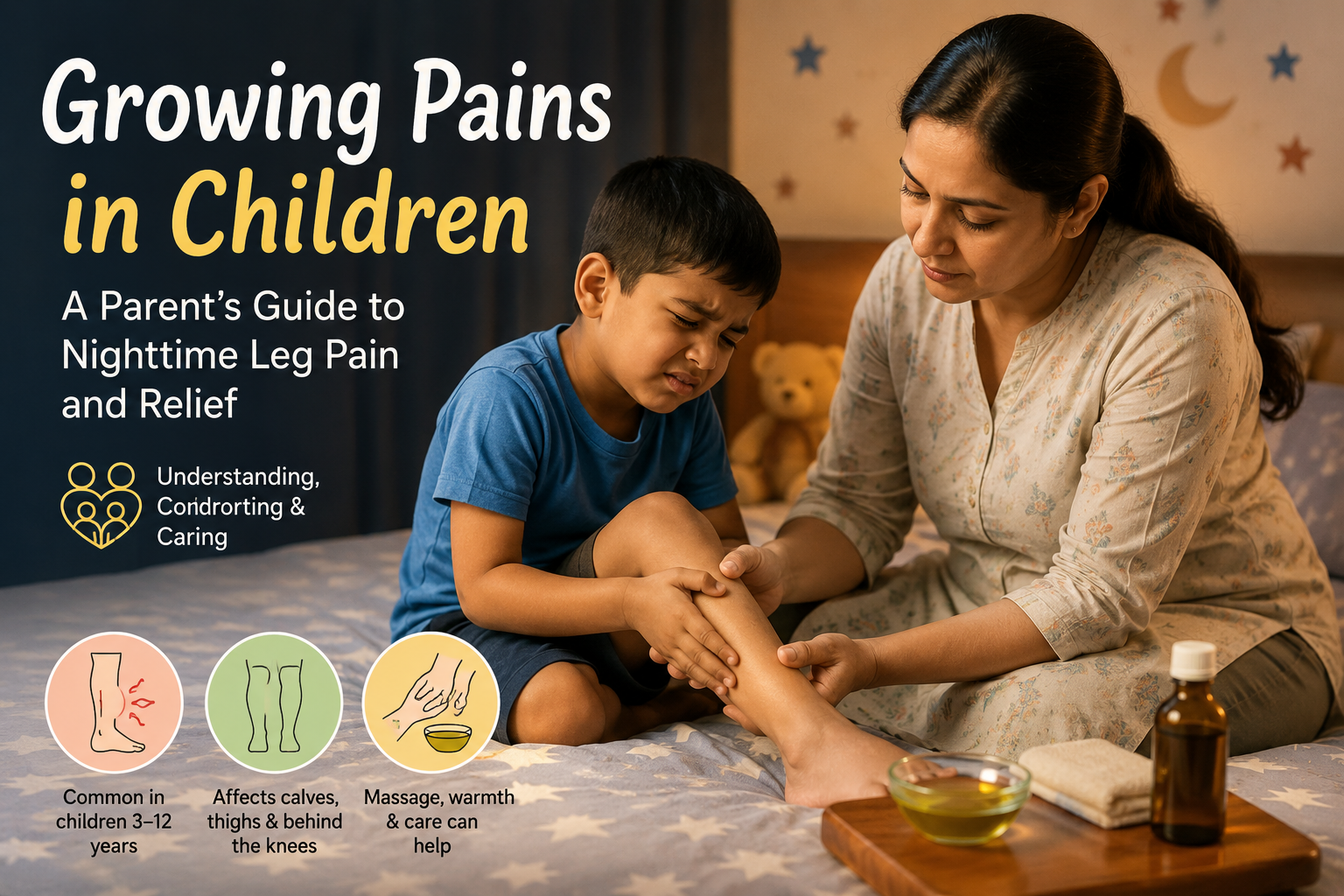
Learn about growing pains in children, my son’s experience, nighttime leg pain, and simple ways that helped comfort him.
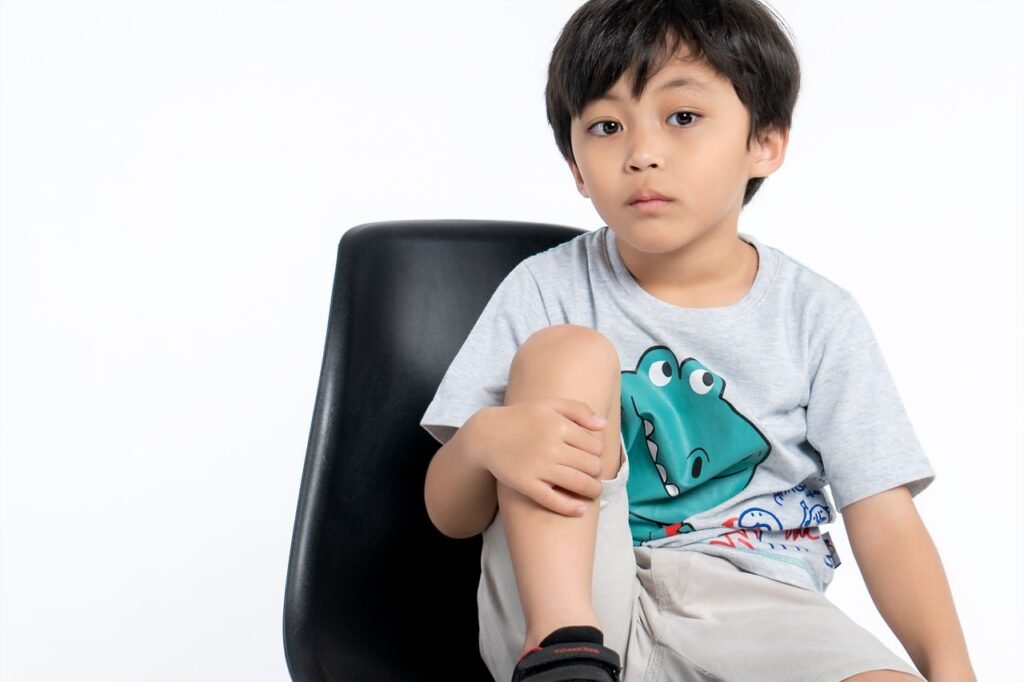
Parenthood is a journey filled with different experiences, and every child teaches us something new.
During my parenting journey, I have gone through many different phases. Interestingly, the challenges I faced when my daughter was young were often completely different from those I experienced with my son.
When my daughter was around three or four years old, I first heard the term “growing pains in children.” Some of her friends were experiencing leg pain, particularly in the evening or at night. However, my daughter never suffered from it, so I never really understood how distressing these pains could be.
Now, with my son, I understand it much better.
What Are Growing Pains in Children?
Growing pains are a common type of leg pain in children, usually affecting children between about 3 and 12 years of age. The pain commonly occurs in the muscles of the calves, thighs, shins, or behind the knees. It often appears in the late afternoon, evening, or at night and can sometimes wake a child from sleep.

Despite the name, there is no clear evidence that growing pains are actually caused by growth itself. The exact cause is still unknown. They are generally harmless and often improve as children get older.
My Son’s Experience With Growing Pains
My son has experienced these pains quite frequently.
Whenever the pain starts, he can become extremely uncomfortable and sometimes cries because of it. Usually, it happens in the evening or during the night.
Initially, I used to gently massage his legs with a pain-relief ointment. It would provide some relief for a while, but unfortunately, the pain sometimes returned after a short period.

Because the pain was recurring, we consulted his pediatrician. The doctor reassured us that this type of leg pain can be common in children and prescribed a calcium supplement for three months.
The supplement seemed to help reduce his discomfort. However, after the three-month period, the pain started appearing again.
That was when I began looking for simple ways to comfort him whenever the pain occurred.
What Helped My Son During an Episode
One home method that has helped my son is a gentle massage with lukewarm mustard oil.
When he complains of leg pain, I warm a small amount of mustard oil and gently massage his legs for some time. Gradually, he becomes more comfortable, and on many occasions, the massage has helped him settle down and sleep again.
I want to make one thing clear: this is my personal experience, not a medically proven treatment for growing pains. Gentle leg massage and warmth are commonly recommended ways to soothe children experiencing growing pains, but parents should use whatever approach is safe and appropriate for their child.
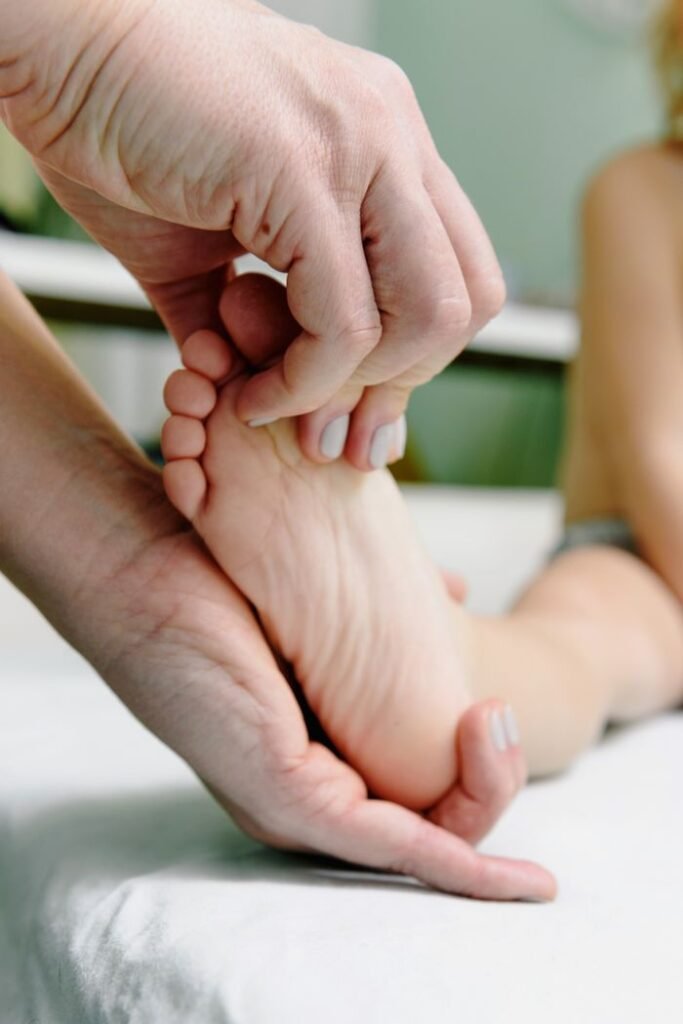
I have also heard other parents mention oils such as ginger or peppermint oil. However, I would recommend being cautious with essential oils in young children because they can irritate the skin and are not necessary for relieving growing pains. A simple gentle massage with a suitable oil—or even without oil—may be enough.
I use lukewarm mustard oil to gently massage my son’s legs, and I have found that it soothes and comforts him during episodes of leg pain. However, mustard oil may cause skin irritation in some children, such as itching, redness, or rashes. So, if you are considering using it for your child, it is better to do a small patch test first and stop using it if any irritation occurs.
If mustard oil is not available, you can also use coconut oil for a gentle massage. Once, when I didn’t have mustard oil at home, I used coconut oil instead, and my son seemed relieved after the massage.
Of course, this is based on my personal experience. The relief may come from the gentle massage and warmth rather than from the oil itself, and every child may respond differently.
Why Does My Child Have Growing Pains?
The exact cause of growing pains is still not known.
They are often associated with aching or throbbing sensations in the legs, particularly in the muscles. They may be more noticeable after a physically active day involving running, jumping, climbing, or playing.
The pain usually:
- occurs in the evening or at night
- affects the legs rather than the joints
- commonly affects both legs
- may come and go over weeks or months
- usually disappears by morning
- can sometimes wake a child during the night
Although growing pains can be frightening and upsetting for both children and parents, typical growing pains are generally harmless.
Does Drinking Milk Prevent Growing Pains?
This is something I wondered about as a mother.
My daughter has always loved drinking milk. Even today, she drinks milk regularly, and she has never experienced what I would call growing pains.
My son, on the other hand, has never been fond of milk. Earlier, he hardly drank it at all. Now I manage to make him drink a small amount, although I still feel it is not enough for his age.
Because calcium is important for healthy bones, I initially wondered whether his dislike of milk could be connected to his leg pain. His pediatrician had also prescribed calcium supplements, which made me think about the connection even more.

However, I later learned that we should not assume that a child’s growing pains are caused by insufficient milk or calcium. Growing pains themselves do not have a clearly established cause. If a child has a nutritional deficiency, the doctor may recommend appropriate supplements based on the child’s individual needs.
So, as parents, we should avoid concluding that a child who does not drink milk will necessarily develop growing pains.
The Sleepless Nights Were Difficult
Some nights have been particularly difficult for us.
My son has sometimes woken up crying because of pain in his legs. I would get up, gently massage his legs, and stay beside him until he became comfortable again.

After some time, he would finally fall asleep.
Those moments may seem small to someone who has never experienced them, but parents know how difficult it can be to watch their child cry in pain in the middle of the night.
There have been quite a few sleepless nights for us because of these episodes.
And perhaps that is another part of parenthood—when our children hurt, we hurt with them.
When Should Parents Consult a Doctor?
Although typical growing pains are usually harmless, parents should not assume that every type of leg pain is growing pain.
It is important to consult a doctor if the pain:

- occurs consistently in only one leg
- continues into the morning or during the daytime
- causes the child to limp or makes walking difficult
- occurs in a particular joint
- is accompanied by swelling, redness, rash, or unusual bruising
- occurs with fever
- is persistent or getting worse
- is accompanied by unusual tiredness, weakness, loss of appetite, or weight loss
These symptoms may indicate that the pain needs further medical evaluation.
A Small Lesson From My Parenting Journey
Having experienced growing pains with my son, I now understand why parents can feel helpless when their child wakes up crying in the middle of the night.
There may not always be a quick solution, but sometimes our presence, a gentle massage, warmth, reassurance, and a little patience can make a difficult night easier.
For my son, gentle massage with warm mustard oil has become one of the things that comforts him when these episodes occur. It may not work the same way for every child, but sharing our experiences can sometimes help another parent discover a safe and comforting approach.
Most importantly, if your child is experiencing recurring or severe leg pain, please consult your pediatrician rather than assuming that it is simply growing pain.
Has Your Child Experienced Growing Pains?
Has your child ever suffered from growing pains or nighttime leg pain?
If yes, I would love to hear about your experience.
What did you do to comfort your child? Did your pediatrician recommend anything that helped?
Please share your experience in the comments. Your story might help another parent who is currently going through the same difficult nights with their child.
Disclaimer: This article is based partly on my personal parenting experience and is intended for general information only. It is not a substitute for professional medical advice. Always consult your child’s pediatrician about persistent, severe, or unusual pain.
3 responses to “Growing Pains in Children: What Helped My Son”
[…] Why Supporting Your Child’s Dreams Matters More Than Imposing Your Ownhttps://ritusamhita.com/Growing Pains in Children: What Helped My Sonhttps://ritusamhita.com/Screen Time in Children: Healthy Limits Every Parent Should […]
[…] Why Supporting Your Child’s Dreams Matters More Than Imposing Your Ownhttps://ritusamhita.com/Growing Pains in Children: What Helped My Sonhttps://ritusamhita.com/Screen Time in Children: Healthy Limits Every Parent Should […]
[…] along the way.https://ritusamhita.com/Choosing Friends: A Parent’s Rolehttps://ritusamhita.com/Growing Pains in Children: What Helped My Sonhttps://ritusamhita.com/Screen Time in Children: Healthy Limits Every Parent Should […]