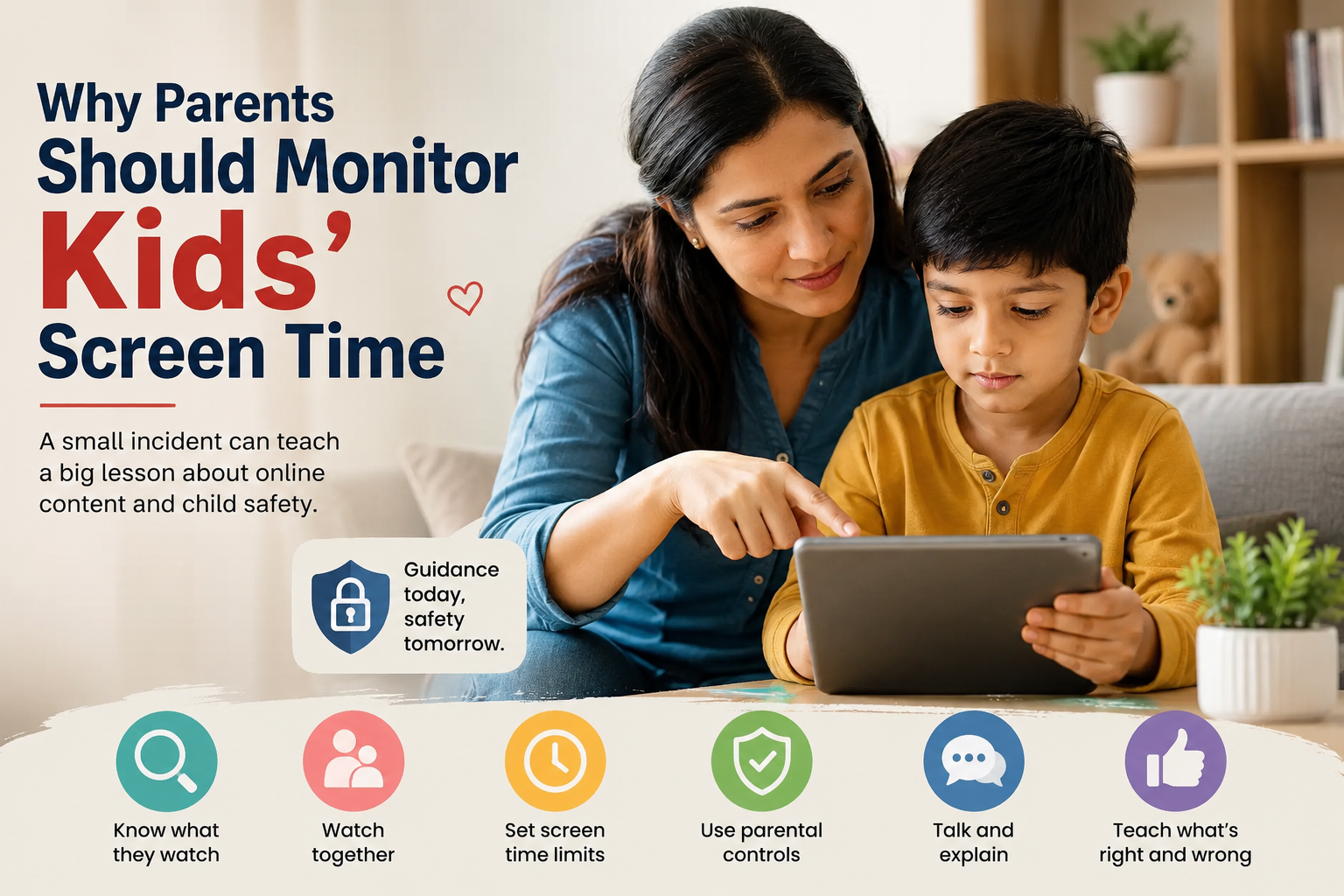
Learn why parents should monitor children’s screen time and online content, and how parental guidance can help keep kids safe.
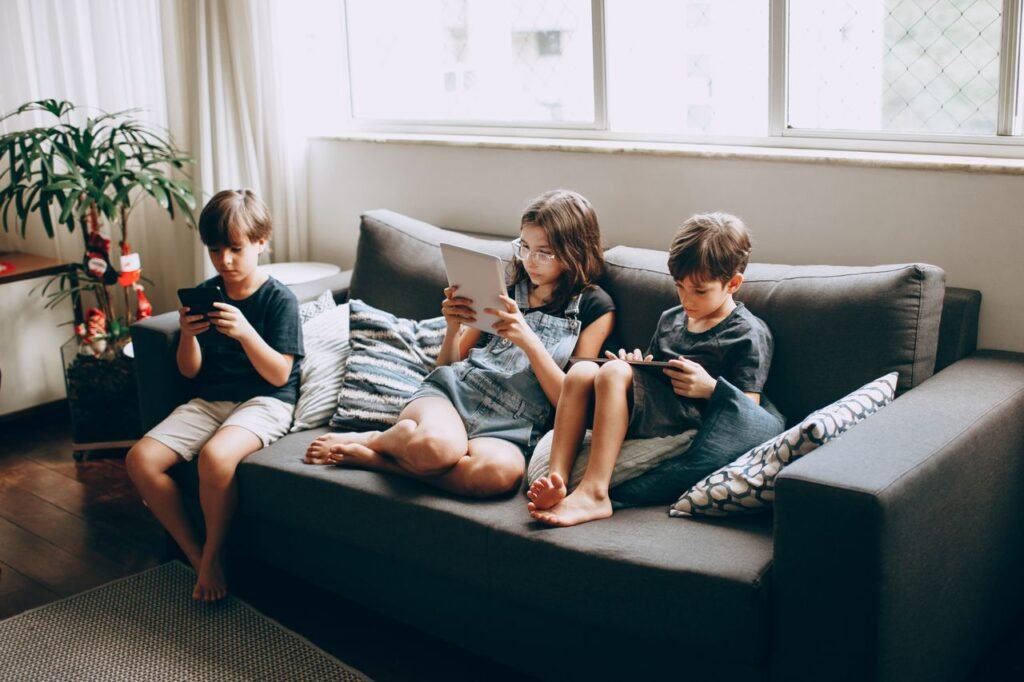
Parenting means paying attention to everything—from the tiny things to the big things happening in our children’s lives.
Children are innocent. They are still learning how to understand the world around them, and they may not always be able to distinguish between what is right and wrong, appropriate and inappropriate.
That is why parental guidance and supervision are so important, especially when it comes to children’s screen time.
Today, children spend a significant amount of time watching television, playing games, watching videos, or chatting with friends on mobile devices. Screens have become a normal part of childhood. But not everything children see online is suitable for them.
Advertisements, short videos, social media content, games, and online videos can sometimes contain language, gestures, behaviour, or ideas that children are not mature enough to understand.
Children may simply copy what they see.
And sometimes, a small incident can make parents realise just how important screen time monitoring really is.
A Small Incident That Taught Me an Important Parenting Lesson
I don’t usually worry much about my daughter when it comes to screen time.
When she was younger, she enjoyed watching some of her favourite cartoons and educational videos, mostly in front of us on television. She was never addicted to mobile phones, and even now she doesn’t spend much time on them.
Today, most of her time is occupied with studies and dance. Whenever she gets some free time, she may watch a movie or television programme. Sometimes I watch it with her, and sometimes she watches while I am busy with my work.
But the important thing is that I generally know what she is watching.
My son, however, is completely different.
He loves screens!
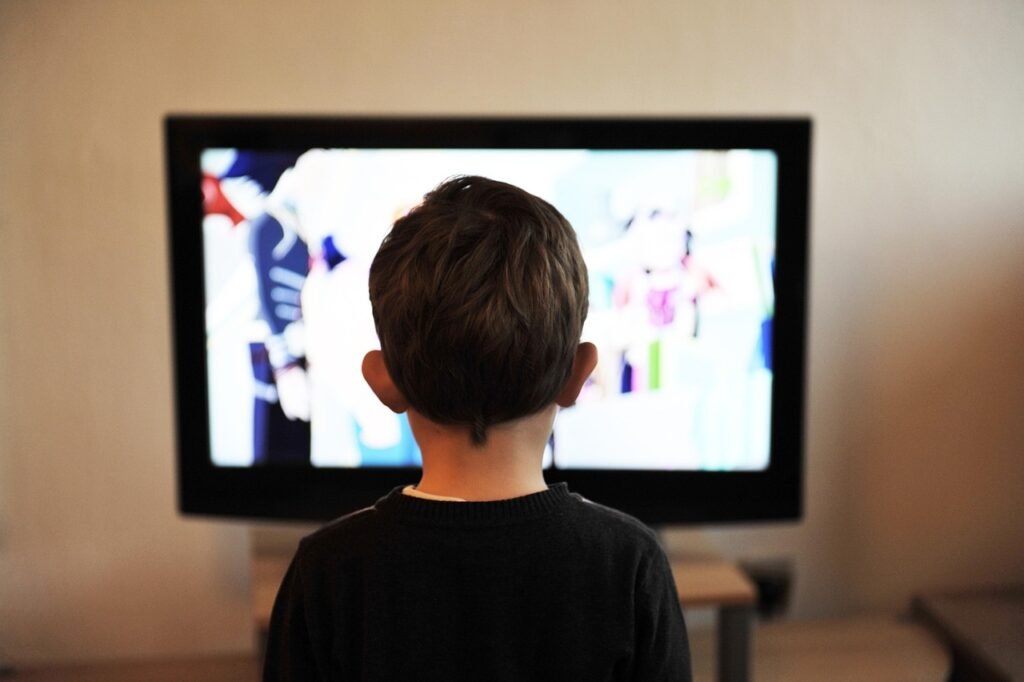
He enjoys playing games on mobile phones, watching videos on mobile devices, and watching television. Like many children today, he is fascinated by the endless variety of online content available on both mobile phones and smart TVs.
One day, something happened that made me realise how careful parents need to be about the content children consume online.
“Mom, He Is Showing a Bad Gesture!”
One afternoon, I served lunch to my daughter and son and went into the kitchen to finish some work.
Suddenly, I heard my daughter shouting at her brother.
At first, I didn’t pay much attention because small arguments between siblings are quite common. But when I realised that the situation wasn’t calming down, I went to check what had happened.
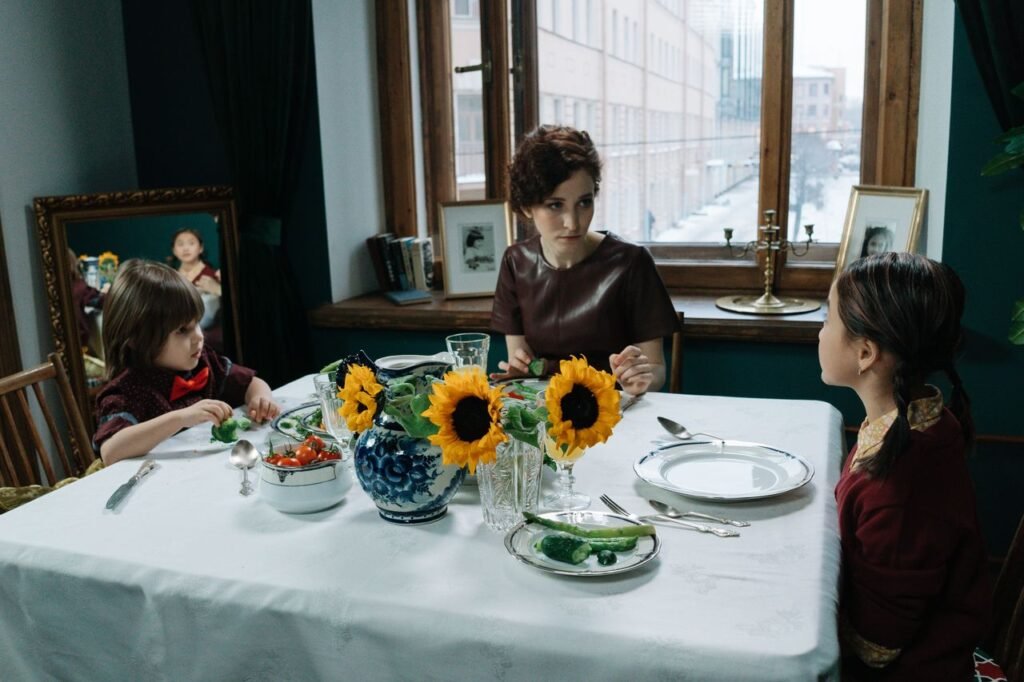
My daughter immediately complained that her brother was showing her a bad gesture.
I asked my son what he had done and asked him to show me the gesture again.
He refused.
That immediately made me suspicious because he seemed to understand that whatever he had been doing wasn’t something good.
When he wouldn’t answer, I asked my daughter what she had seen.
She told me that he was showing his middle finger.
I was shocked.
My first thought was:
“How does he even know about this?”
I asked him again where he had learned it.
Initially, he refused to show me. But eventually, he showed me the gesture.
And then I understood where the problem had come from.
Children Can Copy What They See Without Understanding It
For anyone who may not know, showing the middle finger is generally considered an insulting or offensive gesture in many countries and cultures. Although it may not be commonly understood in the same way everywhere, children can easily encounter such gestures through movies, videos, games, advertisements, or other online content.
My son didn’t learn it from his friends.
He had seen it in an online video.
What surprised me even more was that he didn’t know what the gesture meant.
He simply told me:
“Everybody was doing it, so I did it too.”

That sentence made me realise something very important.
Children don’t always understand what they are watching.
They may see someone doing something funny, strange, rude, or inappropriate and simply copy it because they find it interesting.
They may not understand the meaning behind the behaviour.
That is why children need parental supervision while using screens.
Instead of Getting Angry, We Explained
My daughter was very angry with her brother.
But I explained to her that he hadn’t done it because he wanted to insult her. He simply didn’t understand what the gesture meant.
So instead of scolding him, we decided to teach him.
My husband, my daughter, and I explained to him that the gesture was inappropriate and could hurt or insult another person.
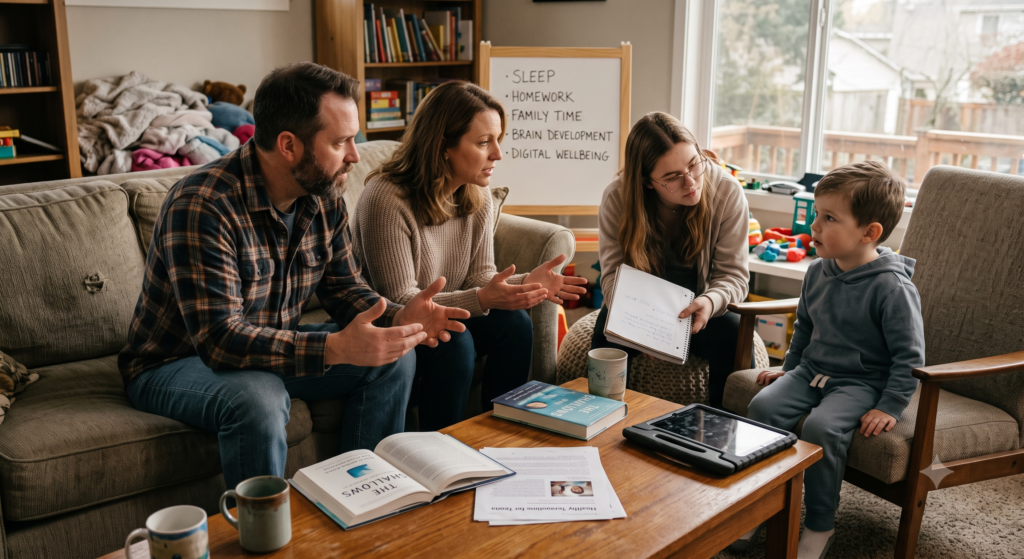
We explained that just because something appears funny in a video doesn’t mean that it is appropriate to copy.
He seemed to understand.
Of course, he is a naughty little boy!
For some time, he occasionally showed the gesture at home just to annoy us or make us laugh. But I noticed that he didn’t do it outside the home, at least as far as we knew.
Still, I wanted to make sure that he stopped doing it completely.
The Little Trick That Worked
One day, I got an idea.
His class teacher had a particular way of handling mischievous children. She would sometimes tell children who weren’t listening that they would have to stay at school instead of going home.
My son believed her completely—and he was quite scared of that possibility!
So one day, I told him:
“If you show that gesture again, I will write a note in your school almanac and tell your teacher what you have been doing.”
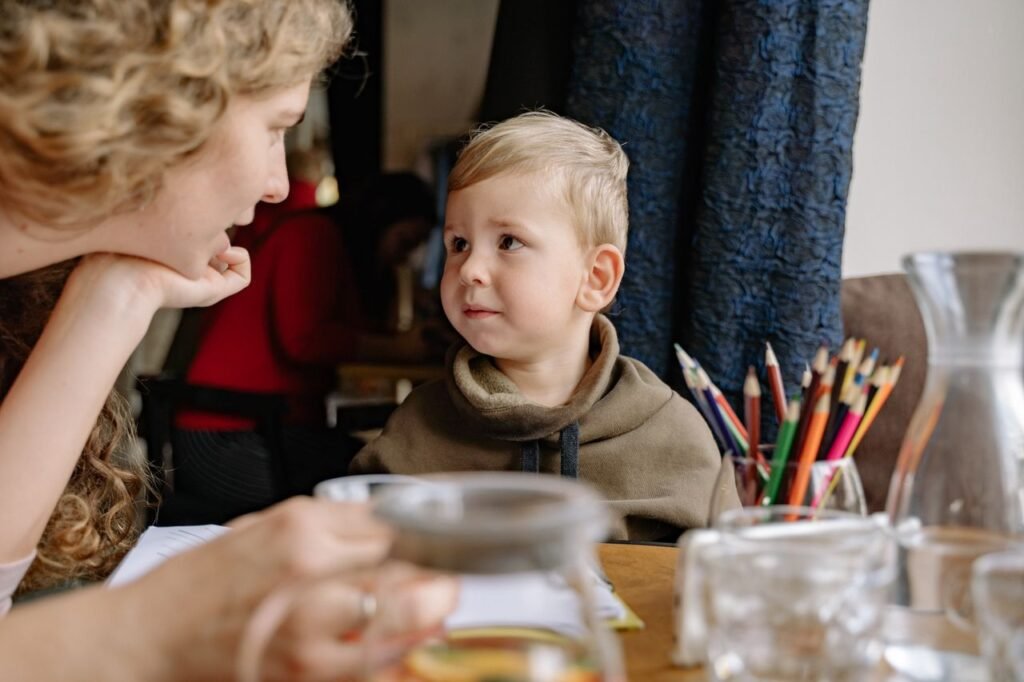
His reaction was immediate.
“No, Mom! Please don’t do that. I won’t show it again.”
And surprisingly, he kept his promise.
After that day, he never showed the gesture again.
What This Incident Taught Me About Children’s Screen Time
This small incident taught me a much bigger lesson.
As parents, we cannot always sit beside our children and watch everything they do.
We have our own responsibilities, household work, jobs, and other commitments.
But we can still make an effort to understand what our children are watching online.
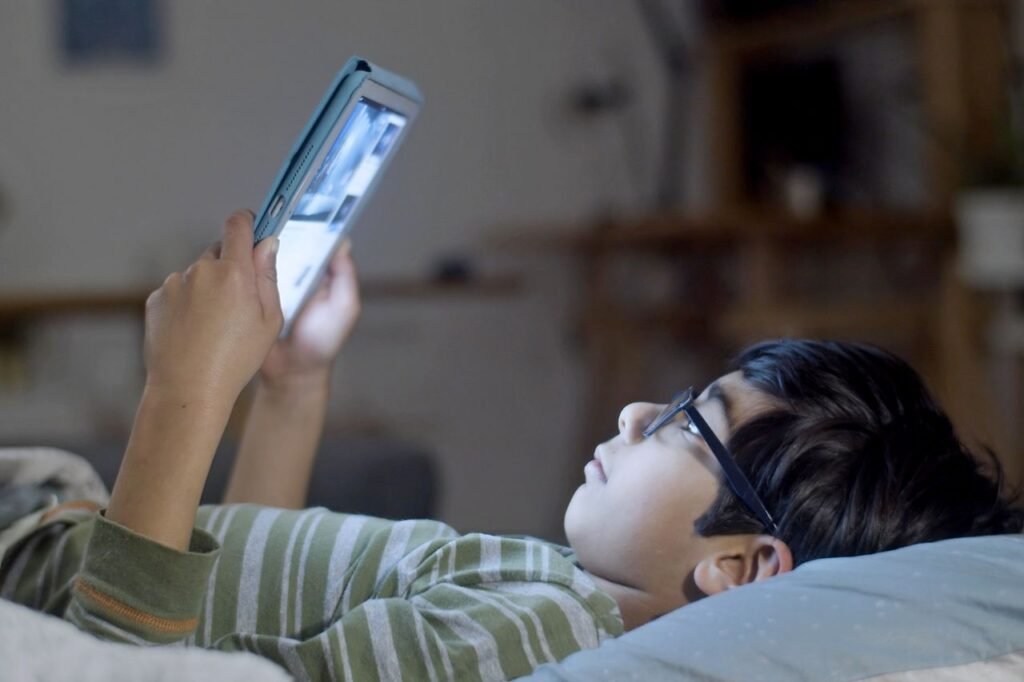
Since that incident, we have become more careful about his screen time.
Whenever possible, we watch videos or play games with him. When we are unable to sit with him because of our work, we check what he has been watching.
We also pay attention to his browsing history and the type of content appearing on the devices he uses.
If we find something that we feel is inappropriate for his age, we remove it or block it.
We are continuing to follow the same approach.
We will probably continue doing so until he is old enough to understand for himself what is appropriate and what isn’t.
Does That Mean Children Shouldn’t Use Screens?
Not necessarily.
Screens are now a part of children’s lives. Educational videos, age-appropriate games, cartoons, movies, and other digital content can have their own benefits.
The real issue is what children are watching, how much time they are spending on screens, and whether they understand what they are seeing.
Instead of completely avoiding technology, parents can teach children how to use it safely and responsibly.
That is an important part of digital parenting.
How Parents Can Make Screen Time Safer
Here are a few simple things parents can do:
- Know what your child is watching. Don’t assume that every children’s video is automatically appropriate.
- Use parental controls where available.
- Check browsing and viewing history from time to time.
- Watch content together whenever possible.
- Explain inappropriate behaviour instead of simply saying “Don’t do that.”
- Teach children that copying something from a video doesn’t make it right.
- Set age-appropriate screen-time limits.
- Talk openly about online content so children feel comfortable asking questions.
- Check advertisements and recommended videos, as children may encounter unexpected content even when they are watching something seemingly harmless.
- Teach children to tell you when they see something confusing, frightening, or inappropriate online.
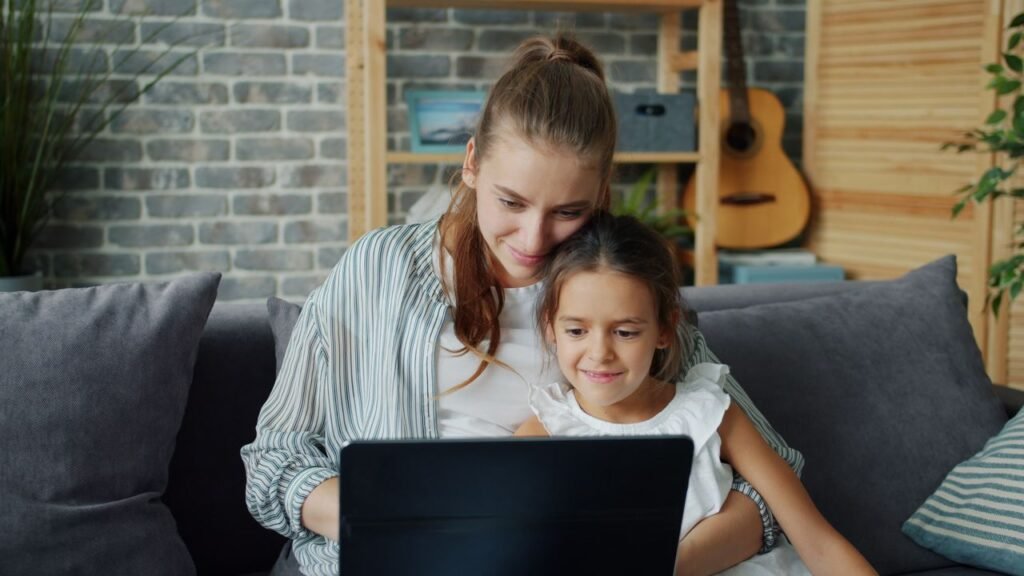
Most importantly, remember that screen monitoring isn’t about spying on children.
It is about protecting them while they are still learning how to navigate the digital world.
Parenting Means Being There When They Need Us
Children don’t come into this world knowing what is right or wrong.
They learn from us, from their teachers, from their friends—and increasingly, from what they see on screens.
Sometimes they copy something without understanding its meaning.
Sometimes they ask questions.
Sometimes they make mistakes.
Our job as parents isn’t to prevent every mistake.
It is to guide them, explain things to them, and help them learn from those mistakes.
That incident with my son may have started with something as simple as a hand gesture, but for me, it became an important parenting lesson. It made me realise that children can easily come across things online that they don’t understand, and sometimes they simply copy what they see.
As parents, we cannot watch every second of our children’s screen time, but we can stay involved, pay attention, and guide them whenever they encounter something inappropriate or confusing.
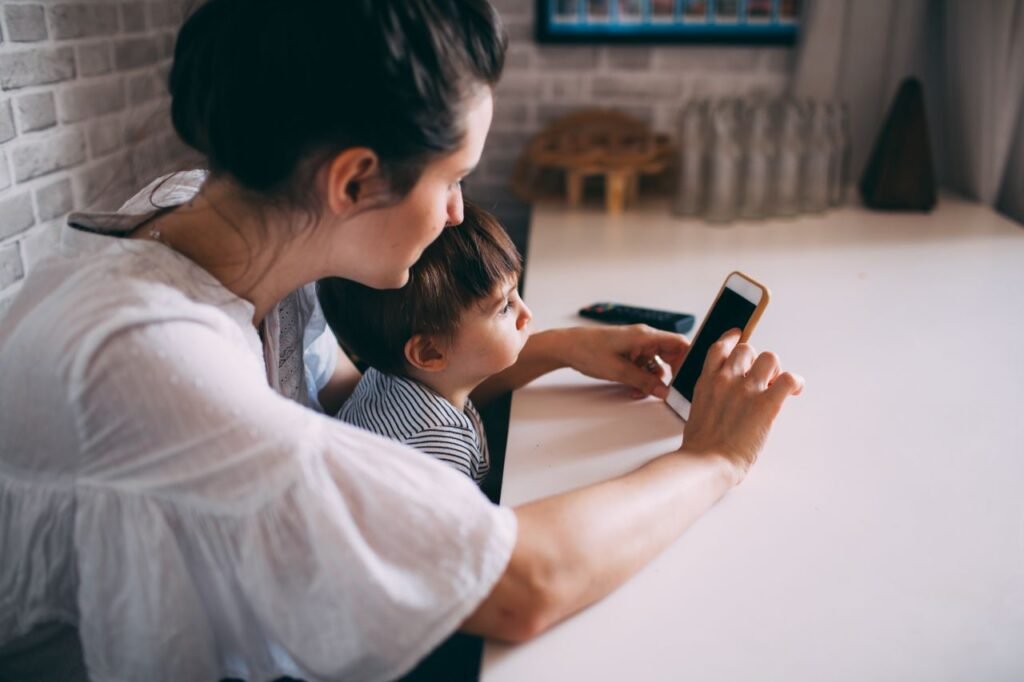
Because sometimes, what looks like a small change in a child’s behaviour can teach us a very big lesson about parenting.
Have You Ever Experienced Something Similar?
Have you ever discovered that your child copied something from a video, game, advertisement, or other online content without understanding what it meant?
If you have experienced something similar, please share your story or experience in the comment section.
I would love to hear from you—and your experience might help another parent who is facing the same situation.
4 responses to “Why Parents Should Monitor Children’s Screen Time”
[…] Children Share Their Tiffin? A Parent’s Guidehttps://ritusamhita.com/Why Parents Should Monitor Children’s Screen Timehttps://ritusamhita.com/How Parents Can Motivate Children to Do […]
[…] way.https://ritusamhita.com/Textbook Knowledge Is Not Enough For Childrenhttps://ritusamhita.com/Why Parents Should Monitor Children’s Screen Timehttps://ritusamhita.com/How Parents Can Motivate Children to Do […]
[…] way.https://ritusamhita.com/Textbook Knowledge Is Not Enough For Childrenhttps://ritusamhita.com/Why Parents Should Monitor Children’s Screen Timehttps://ritusamhita.com/How Sibling Influence Reduced My Son’s Screen […]
[…] way.https://ritusamhita.com/Textbook Knowledge Is Not Enough For Childrenhttps://ritusamhita.com/Why Parents Should Monitor Children’s Screen Timehttps://ritusamhita.com/How I Helped My Son Build a Twice-Daily Brushing […]