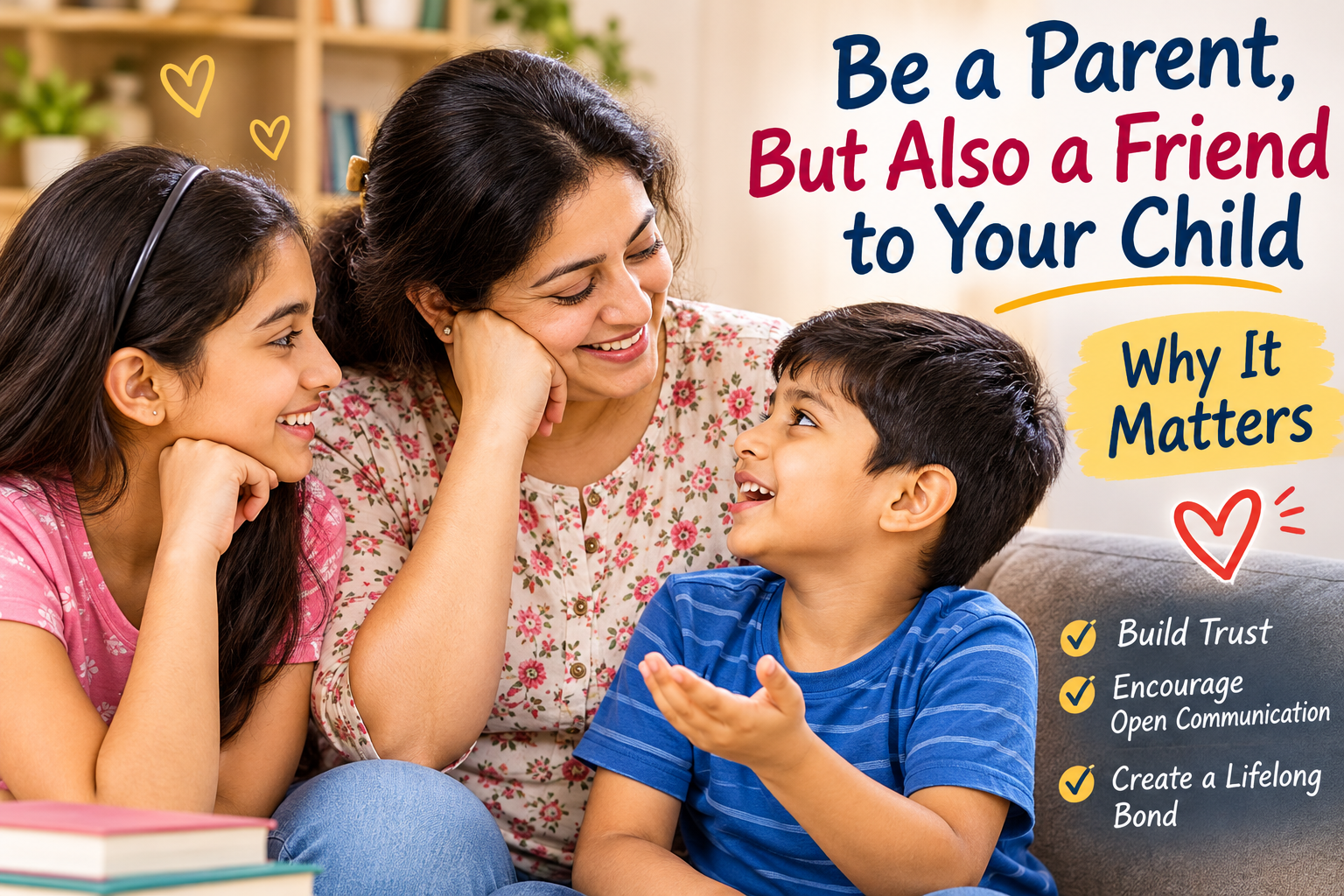
Be a Parent, But Also Be a Friend to Your Child. Learn why parents should also be friends with their children. Discover simple parenting tips to build trust, encourage communication and strengthen your bond.

Parenthood is an endless book of memories. We experience so many things during this phase of life that we never expected before. Every day brings a new chapter, and from these experiences, we learn many things.
I don’t know about others, but for me, this is 100% true. I am always learning throughout my parenting journey. Before my son was born, I thought that raising him would be quite easy after having my daughter. But no! My experiences have been completely different in both cases.
I am not saying that I am an expert in parenting or that you have to follow my methods or instructions to raise your children. I simply love sharing the experiences I gather along this journey and what I learn from them. I hope some parents may have similar experiences, and reading my blog might make it a little easier for them to deal with such situations.
Because I believe our parenting journey becomes more enjoyable when we learn and support each other.
Today, I have chosen a topic that I feel is very important in raising children: We should be parents as well as friends to our children.
Why do I feel this is necessary? I would love to share my views on this topic, and I also welcome your thoughts on this sensitive subject.
Why Should We Be Friends with Our Children?
We are parents, so by default, we will always be parents to our children. There is no doubt about it.
We take good care of them and fulfill their needs and demands. We teach them how to be responsible, how to respect others, and how to understand what is good or bad for them. We always try our best to help them become good human beings.
All these things are really necessary, so we parents do our best to fulfill these responsibilities.
But why am I saying that we should also be friends with our children?
I am just coming to the point.
As parents, it is our responsibility to teach good lessons to our children, and we do that. But no one is perfect. Sometimes, we may make mistakes too. These mistakes can happen unintentionally, depending on certain situations or circumstances.
The same thing is true for our children.
Many of us think that since we have taught our children good lessons, they should follow them throughout their lives. But what happens when a child does something contrary to what we have taught?
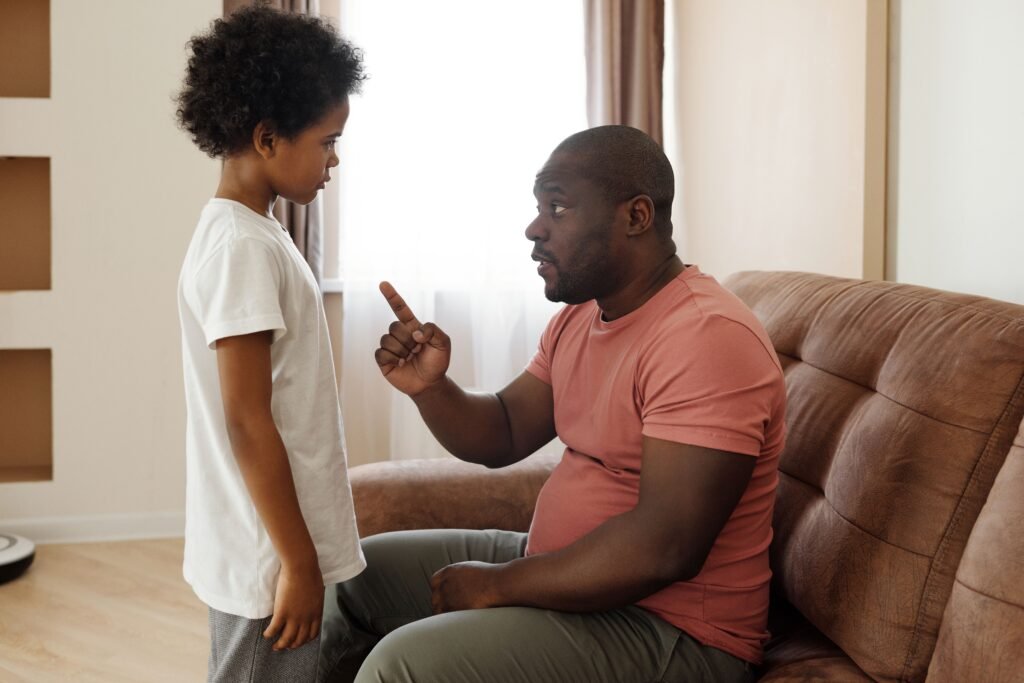
Some parents become very angry and start scolding their children repeatedly. I have even seen some parents use harsh words while dealing with such situations.
This shouldn’t happen.
Give Your Child the Freedom to Express Their Feelings
If we always scold our children for their mistakes, they may eventually start hiding the things they have done wrong.
So, what should we actually do?
See, we are human beings, so naturally, we may become angry when our children do something wrong. It is quite normal. So, if you feel angry initially, it’s okay. But after expressing your anger, try to calm down and give your child an opportunity to explain their side of the story.
Sometimes, mistakes happen unintentionally, and external factors may also be responsible. Therefore, we should patiently listen to our children and encourage them to share their point of view.
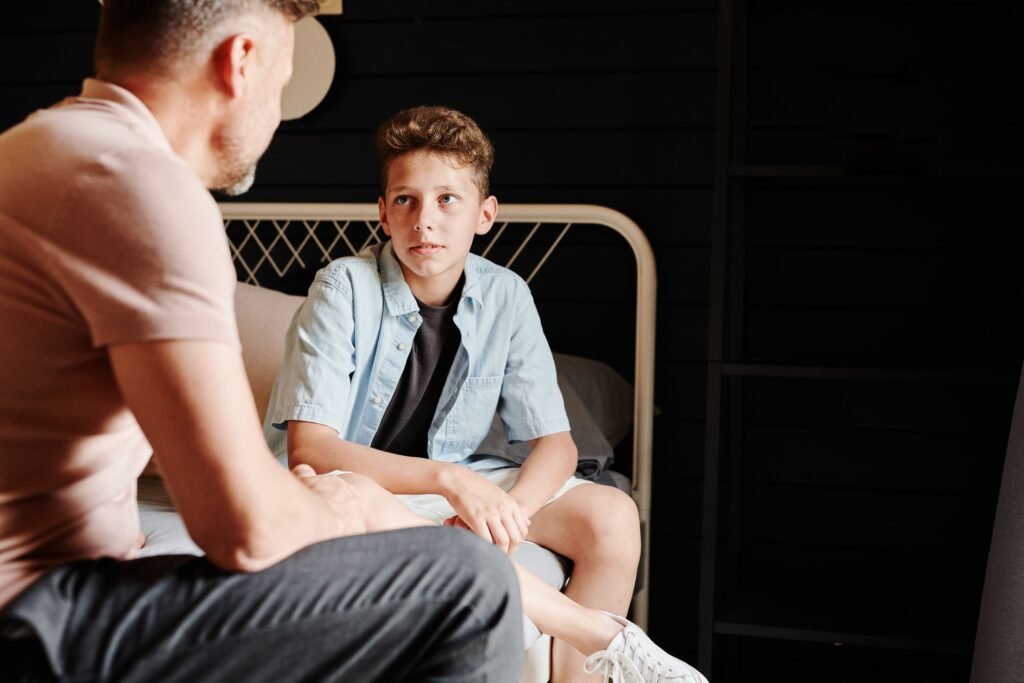
This is a very helpful practice in parenting. It encourages children to become more open with their parents.
But if we repeatedly scold them for their mistakes, after some time, they may start hiding things from us. A thought may develop in their minds: If I tell Mom or Dad what happened, they will start scolding me.
This habit is not good for their emotional development. If children start hiding their mistakes, how will they understand why they shouldn’t repeat them? How will they learn to correct their mistakes?
That is why we should always create a safe space where our children feel comfortable sharing everything with us.
They should feel that, whatever happens in their everyday lives, whether they do something right or wrong, there is always a place where they can share their experiences and receive good advice about what to do next.
Can Friends Always Replace Parents?
Children indeed make their best friends at school, in activity centres, or among their neighbours. But are those friends really the people with whom they share everything?
What happens if they face problems with those friends one day?
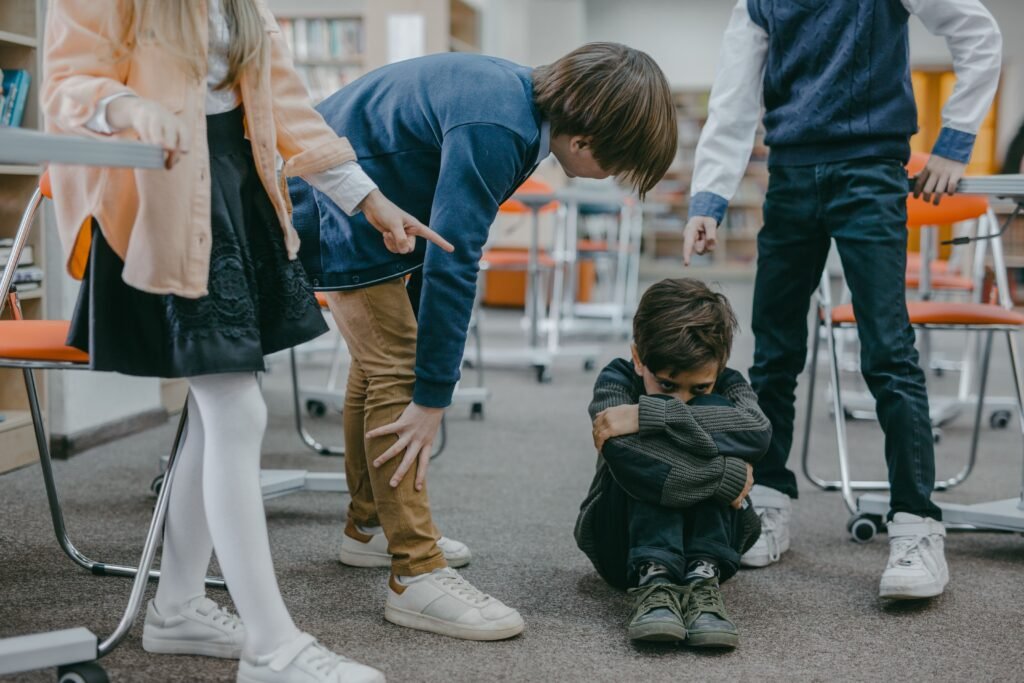
Children are innocent. They make friends with people with whom they feel comfortable spending time. But friendships can sometimes go through difficult phases.
If something happens between friends and they become angry with each other, children may not know whom to approach to share their feelings. Some children become so upset that they stop talking to their best friends for several days.
At such times, who will be there to understand their feelings?
Their parents.
Parents are the people who can provide them with a sense of security and reassurance, even when their friendships go through difficult times.
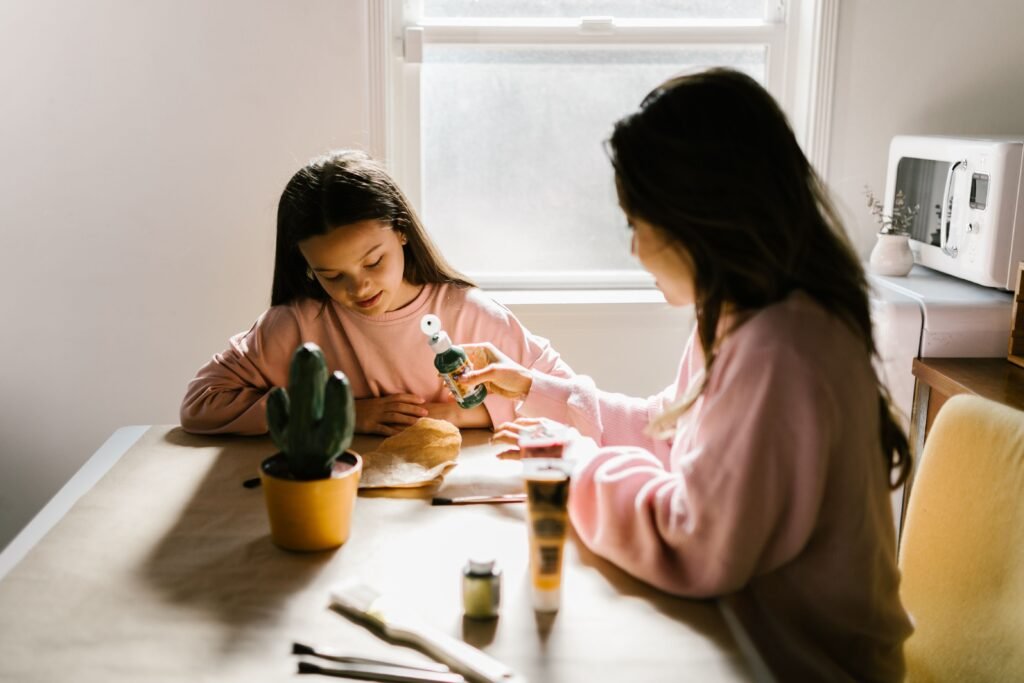
Of course, children need friends outside their families, and we should encourage them to build healthy friendships. But I strongly believe that no friendship should make them feel that they cannot turn to their parents.
Our children should know that, no matter what happens, they can always come back to us.
So, let’s always keep that special place in our children’s hearts where they can feel safe, understood and loved.
Pay Attention to Your Child’s Silence
Some children are very quiet and calm. They may not share their feelings unless someone, particularly their parents, asks them about what happened.
We are all busy with our day-to-day lives, but as parents, we should be attentive to such situations.
After returning from school or somewhere else, if you find your child unusually quiet or upset, please don’t ignore it.
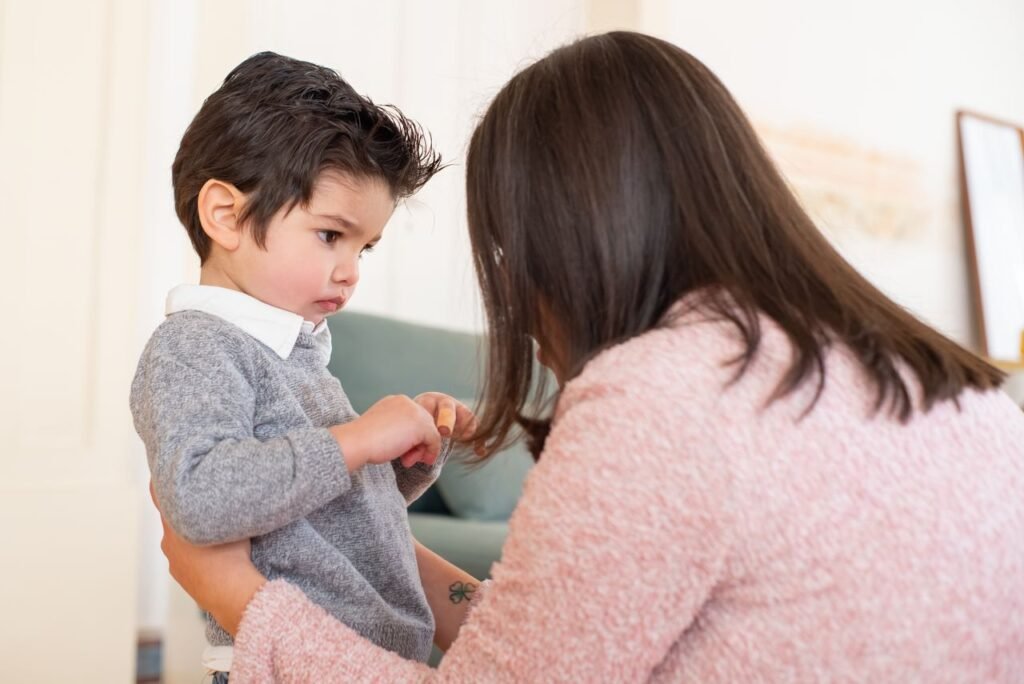
Talk to them. Make them feel comfortable enough to share the incident or experience that might be bothering them. Listen carefully without interrupting or immediately judging them.
After listening, try to make them feel better and assure them that Mom and Dad will always be there for them.
Tell them that they are not alone and that everything will be fine.
Sometimes, children don’t need immediate solutions to their problems. They simply need someone who will listen to them, understand their feelings and make them feel supported.
Your Child Needs a Parent They Can Trust
This simple practice can make a big difference in building a strong parent-child relationship.
It gives children confidence and reassures them that their parents are always there for them. Whatever the situation may be, they know they have someone to turn to for support and guidance.
Being a friend to your child doesn’t mean giving up your parental responsibilities or allowing them to do whatever they want. We still need to set boundaries, teach discipline and guide them towards the right path.
But alongside these responsibilities, we should also be approachable, understanding and patient.

I believe that when children see their parents as trusted friends, they become more comfortable sharing their happiness, fears, mistakes and disappointments.
And isn’t that what we want as parents?
We want our children to grow up knowing that they can share anything with us without being afraid of our reactions.
I have simply shared my views on this subject based on my own parenting experiences. What do you think? Do you also believe that parents should be friends with their children?
Please don’t forget to share your thoughts in the comment section. I would love to hear from you, and your experiences and suggestions may help other parents too.
Let’s learn from each other and make our parenting journey more beautiful!