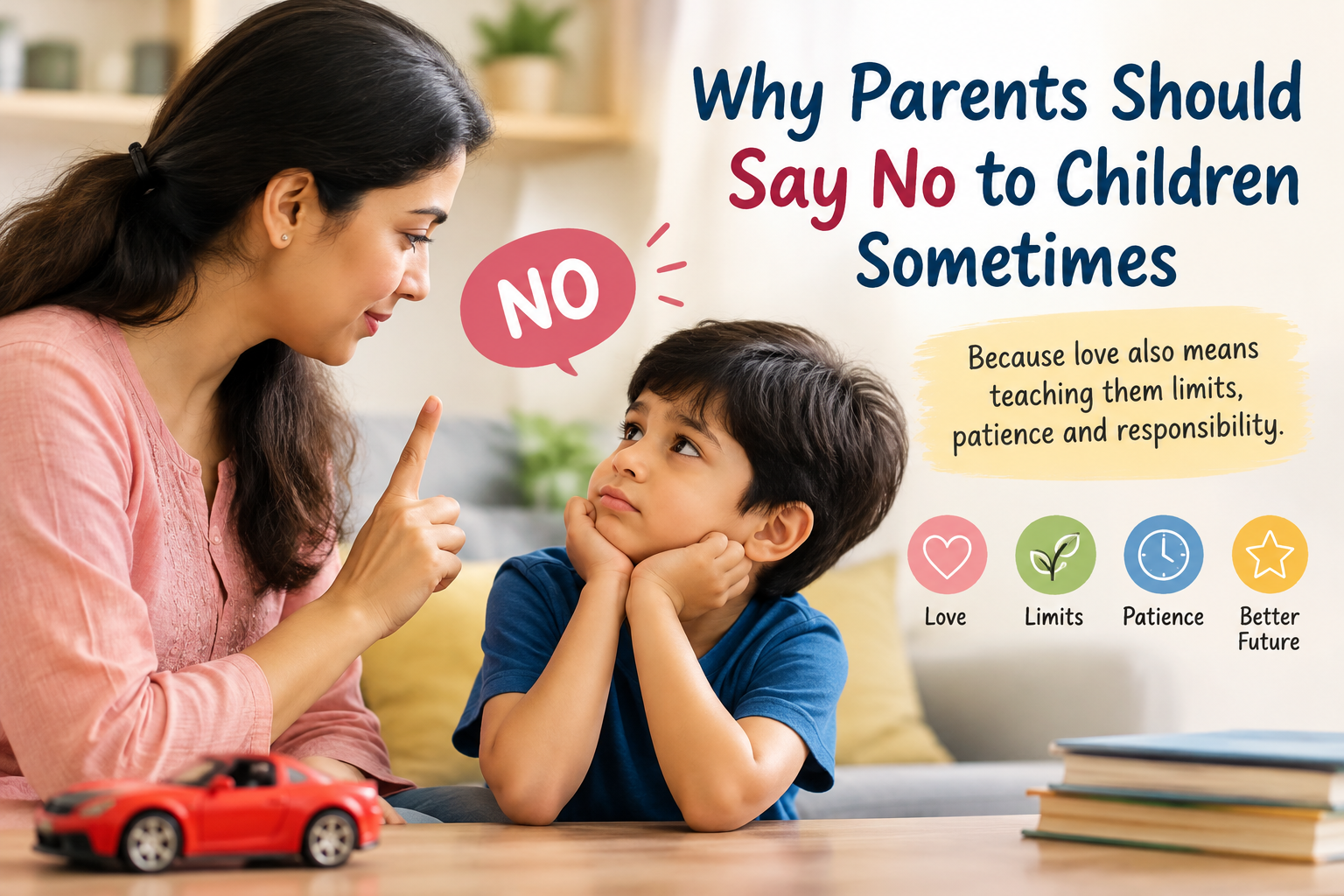
Learn why sometimes saying ‘NO’ to children is an important parenting practice and how setting healthy boundaries can teach them patience, limits, and responsibility.

Don’t fulfill your child’s demands always. Does this sound a little rude? Maybe it does. But I believe this is also an important parenting practice that every parent should follow.
We love our children more than anything. But loving our children doesn’t mean that we have to fulfill every demand they make.
Sometimes, we should say “NO” to certain demands, even when we are capable of fulfilling them. It may hurt our child for a moment, but it also teaches them an important lesson: we cannot always get everything we want.
This is one of the simplest ways to teach children about limits, patience, and scarcity.
Why Is Saying “No” Important in Parenting?
Children are little now, so their demands may also be small. They may ask for chocolates, ice creams, toys, balloons, video games, or something they have seen another child using.
But as they grow up, their demands may become bigger and more expensive. At that point, it may not always be possible for parents to fulfill every demand.
If children grow up believing that whatever they ask for will always be given to them, they may find it difficult to accept “NO” later.
Their emotions may also be different at that age. They may even think, “My mother or father doesn’t love me like before.”
But actually, the scenario is different.
Saying no does not mean that we love our children less. Sometimes, saying no is also a way of teaching them.
An Incident I Came Across
I have come across several incidents related to this, and I would like to share one about a boy who lives in our neighborhood.
He is now 10 years old and is the only child of his parents. Since childhood, his parents have pampered him a lot. Whatever he demanded, he usually got.
It was easy for his parents when he was little because his demands were small—chocolates, ice creams, balloons, bats and balls, small cars, and similar things.
But, as I said earlier, the scenario has changed now.
Today, he demands expensive remote-controlled cars, toy robots, video games, and other costly things that may not always be possible for any parent to buy.
So whenever his parents say “NO,” he starts creating a scene, sometimes even in front of other people. This becomes embarrassing for his parents, and eventually, they feel compelled to buy the expensive product just to calm him down.

I am talking about one family, but I believe similar situations are faced by many parents nowadays.
Perhaps if they had started setting boundaries around his demands from childhood, the situation might have been different today.
What I Am Practicing With My Children
I am also trying to practice the same thing in my parenting journey.
My daughter was not a demanding child from her childhood. But my son has a tendency to demand things, especially whenever we go outside.
Sometimes we fulfill his demands, but sometimes we don’t.
So, he knows very well that even if he asks for something, there is no complete certainty that he will get it.
If he likes something, he may request us to buy it. But if we feel that he doesn’t need it at that particular time, we explain our reason to him.
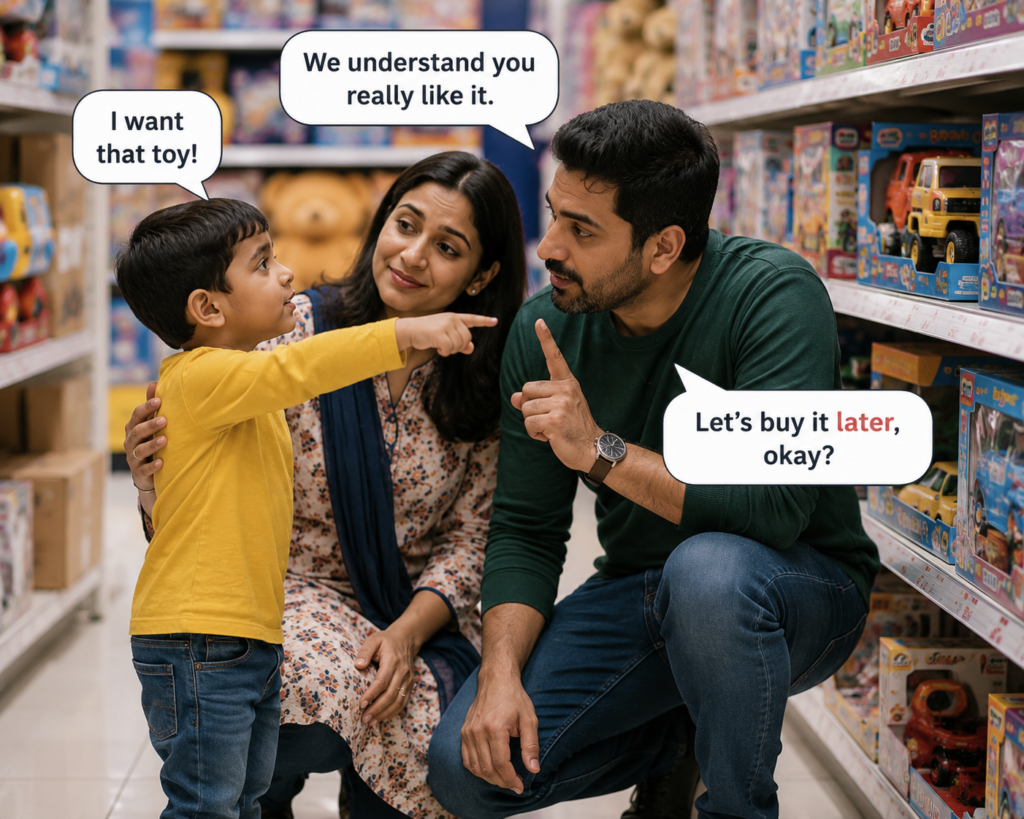
Most of the time, he understands and doesn’t continue asking for it.
I think this is an important lesson for children to learn from an early age.
Children Need Love, But They Also Need Boundaries
We should remember one thing: children are small, and they are still learning how to understand their emotions, wants, and limits.
They may not always know what is good or necessary for them. As parents, we are mature enough to make those decisions for them with care and understanding.
Setting boundaries doesn’t mean being harsh with children.

It means helping them understand that:
- We cannot always get everything we want.
- Sometimes we have to wait.
- Sometimes we have to accept “NO.”
- Not everything we see or like is necessary.
- We should learn to control our wants and emotions.
When we teach these lessons from childhood, we may make things easier for them as they grow up.
Love your children. Pamper them sometimes. Fulfill their wishes when you can. But don’t be afraid to say “NO” when necessary.
Because sometimes, a loving “NO” today can help children handle a bigger “NO” tomorrow.
Have you ever faced this type of situation with your child?
If yes, please feel free to share your experience in the comment section below. I would love to hear from you. Your experience may also help other parents who are facing the same challenges.